Tuesday – Saturday 10am – 6pm
Kutlesa is pleased to announce Oblivion Blues, an exhibition of new works by Oakland‑based artist Yulia Pinkusevich at the gallery’s New York location, marking the artist’s first solo show with the gallery since she joined. Bringing together a series of large scale works, the exhibition explores the unstable territory between abstraction and information, memory and measurement, and the systems developed to record catastrophe and the lived experience of those who endure it.
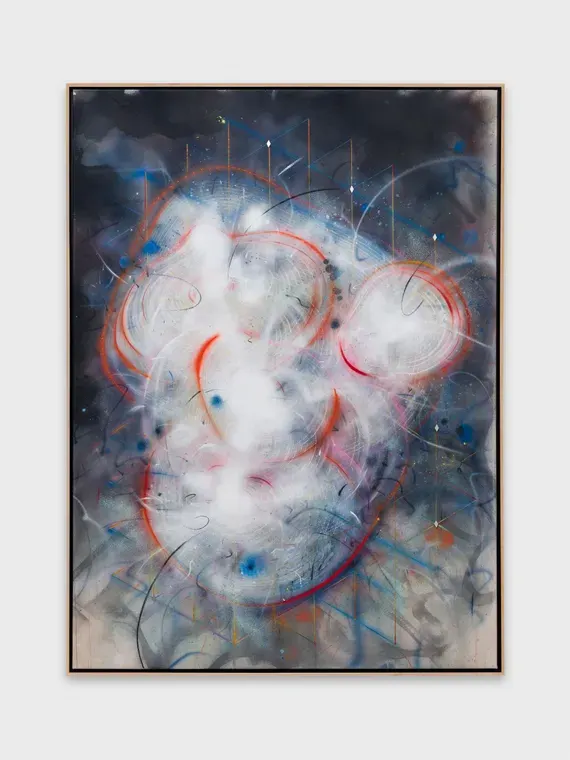
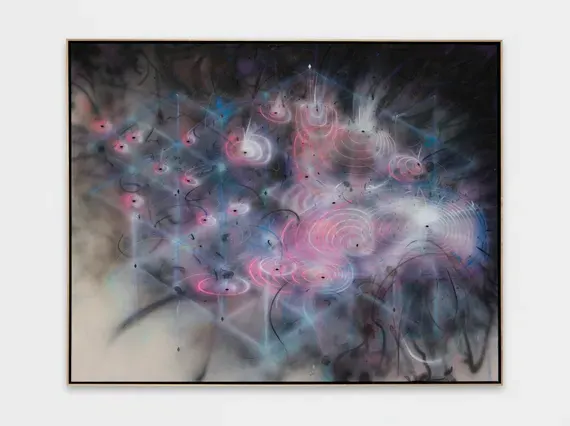
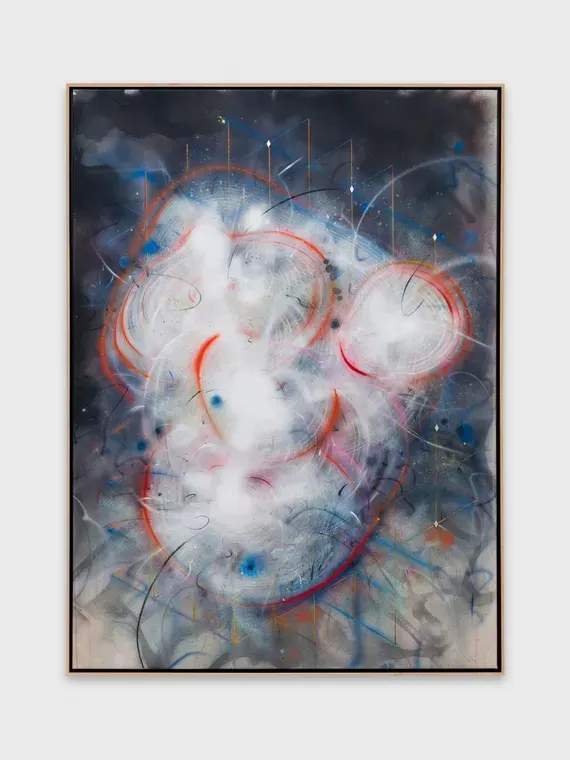
Pinkusevich’s paintings originate in the isorithm, a geometric method developed in the context of civil defense to map the effects of an explosive event across inhabited terrain. Designed to render destruction measurable, these diagrams translate an otherwise immeasurable event into lines, distances, and concentric fields. The maps were created through Geographic Information System (GIS) in collaboration with Northeastern University’s Professor of Public Policy Mark Henderson, translating population and geographical data as well as contemporary global conflict into precise spatial structures. In Oblivion Blues, Pinkusevich takes this rational language as a point of departure, transforming it through the physical processes of drawing and painting into expansive and highly charged compositions.The exhibition also incorporates a series of historic wallpaper images drawn from archival material documenting declassified CIA reconnaissance missions and aerial bombing campaigns from the 1940s and subsequent decades. Pinkusevich encountered these images during her research as a Fellow at the Smithsonian National Air and Space Museum, where archival records of aerial surveillance and military operations became part of her investigation into the ways technology has transformed violence into images, information, and systems of observation.The source of this inquiry is both historical and personal. Born in Kharkiv and raised during the late Soviet period, Pinkusevich grew up amid civil-defense exercises, fallout shelters, and the persistent awareness of potential catastrophe. Shortly before the dissolution of the Soviet Union, her family immigrated to New York. During the journey, she recalls witnessing the deep grooves of military tanks impressed into the asphalt-an image that has remained with her as a formative encounter with the way political events become inscribed into landscape and memory.For Pinkusevich, the diagram is never simply an image of information. It is a structure through which an event, a place, and a period of time can be held in relation to one another. The works address three ongoing military conflicts funded in part by U.S. taxpayers. Her new paintings translate these systems into fields of ink, oil, acrylic, mineral pigments, mica, and mirrored glass. Their geometric structures are generated through technological and data-driven processes, then created entirely by hand. What begins as calculation becomes gesture; what begins as measurement becomes matter.Across the exhibition, concentric forms accumulate, intersect, expand, and disappear. Their configurations may evoke maps, planetary systems, cellular structures, or atmospheric phenomena. Yet the apparent neutrality of these forms is continually unsettled by their origins. The lines and coordinates correspond to real places and events, allowing geography and duration to enter the paintings without being represented pictorially. Violence is neither illustrated nor narrated; its scale and distribution are registered through the organization of the painted field. This movement between the measurable and the immeasurable is fundamental to Pinkusevich’s practice. By redrawing each structure by hand, she introduces duration, repetition, and physical presence into images initially conceived through systems of efficiency and calculation. Mirrored glass embedded within several works further complicates the relationship between image and viewer, reflecting fragments of the surrounding architecture and, at times, the viewer’s own image. Distance becomes proximity; the observer becomes part of the work.The title Oblivion Blues brings together the persistence of memory and the gradual fading of historical experience. Pinkusevich’s paintings inhabit the space between remembering and forgetting, between recorded information and lived experience. By transforming systems of calculation into materially complex paintings, she turns information into sensation and measurement into memory. Oblivion Blues translates data sets of violence into paintings that transform these diagrams of mass destruction into images of life, presence, and empathy.
Yulia Pinkusevich
Iron Sword
2026
Ink, oil, acrylic, mineral pigments and mirrored glass on canvas
74 x 54 inches
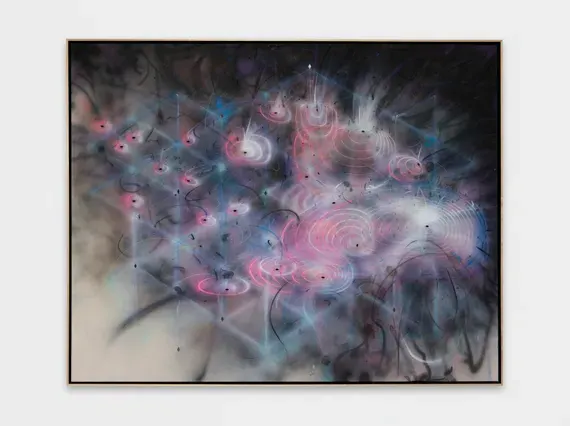
Yulia Pinkusevich
U can never go home again
2026
Ink, acrylic, mica, minerals and glass on canvas
65 x 82 inches
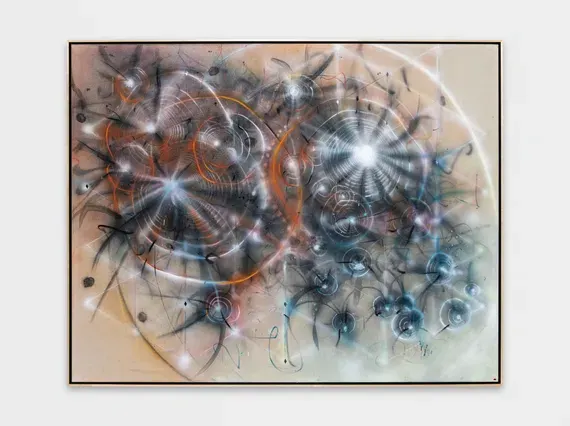
Yulia Pinkusevich
Epic Fury
2026
Ink, oil, acrylic, charcoal, ash, mineral pigment and mirrors on canvas
65 x 82 inches
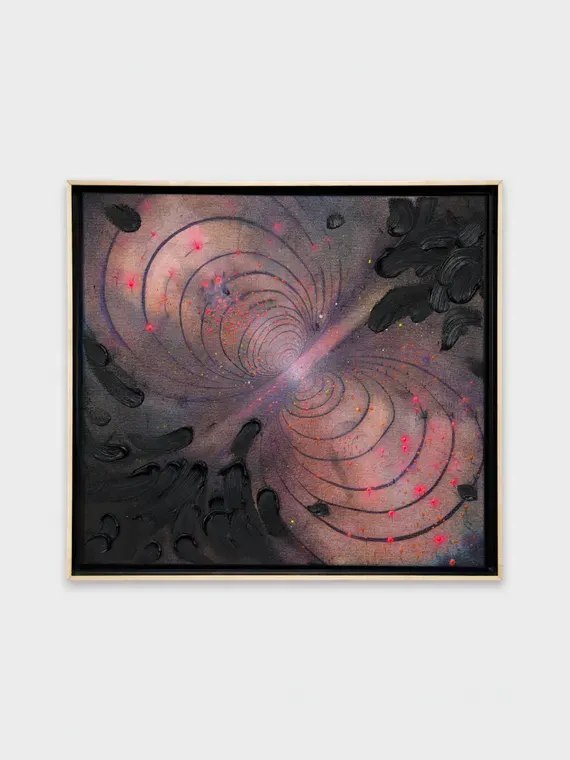
Yulia Pinkusevich
Forgive Me, I Love You
2026
Oil and acrylic on canvas
20 x 18 inches