Hans Op de Beeck
September 10 to November 7, 2026
Almine Rech, Abdijstraat 20 / Rue de l’Abbaye, BrusselsTuesday – Saturday 11am – 7pm
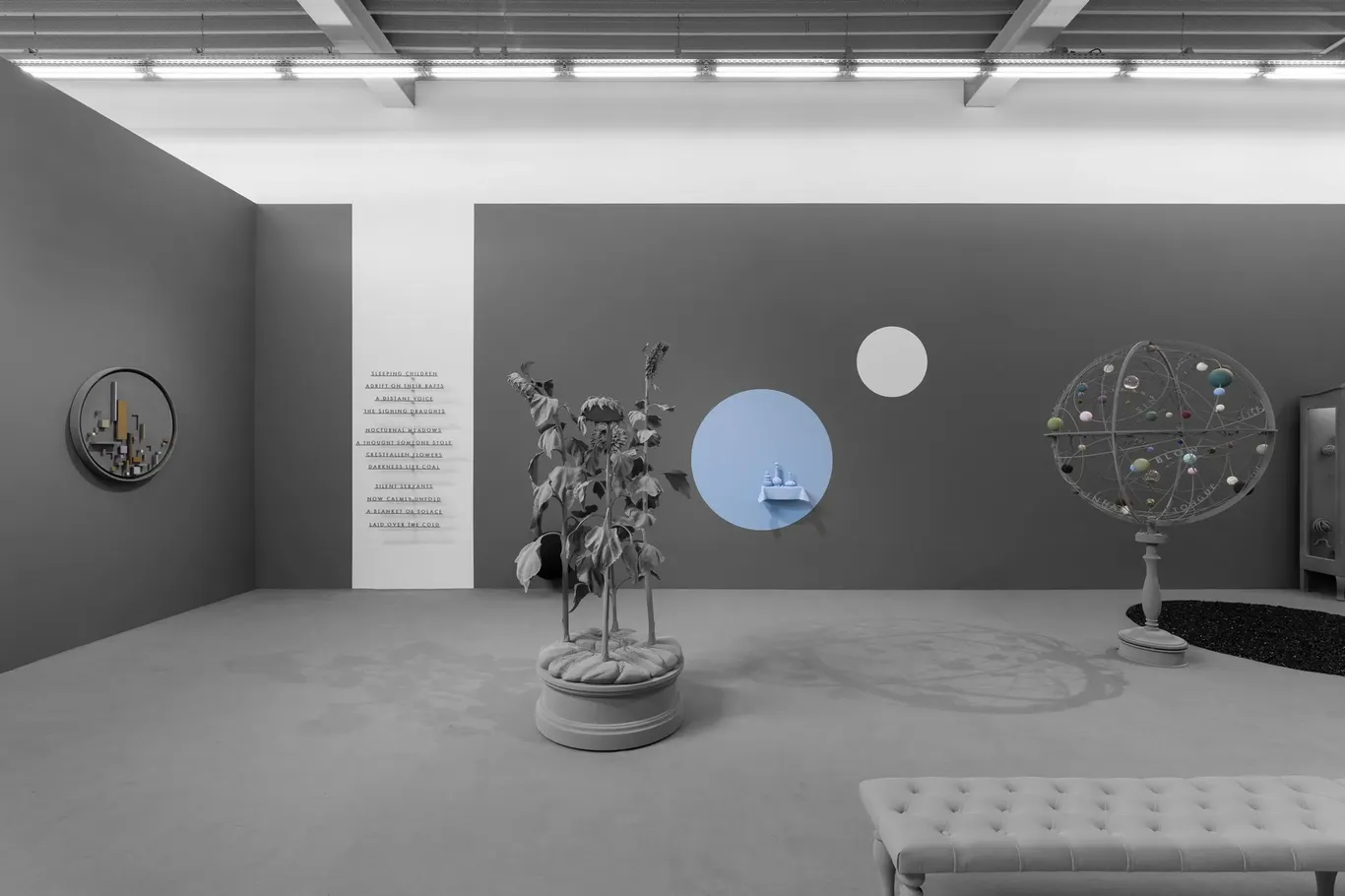
Almine Rech Brussels is pleased to present ’Vanishing Point,’ Hans Op de Beeck’s first solo exhibition with the gallery, on view from September 10 to November 7, 2026.
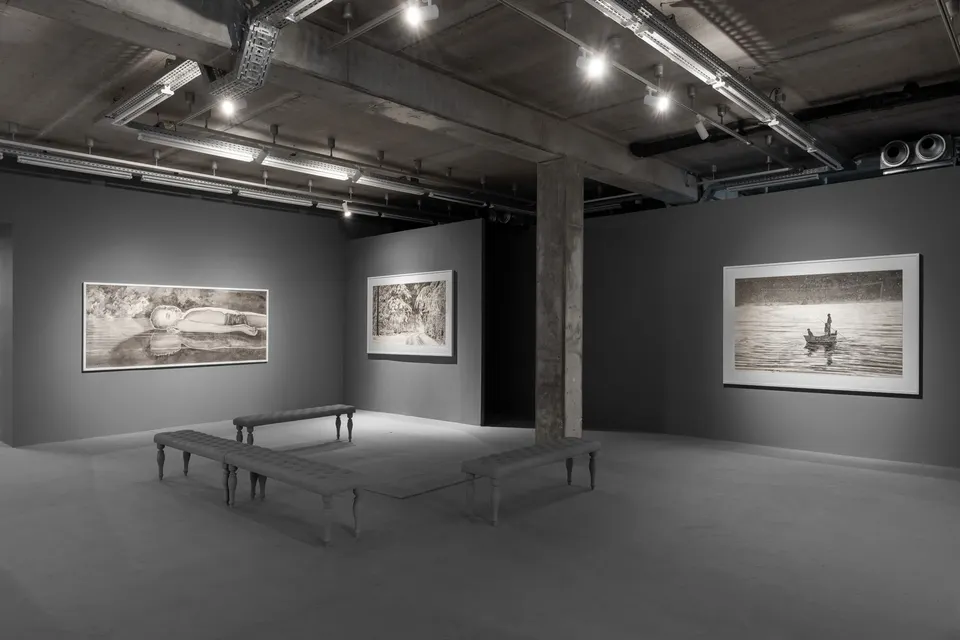
The Vanishing Point as Horizon in the Work of Hans Op de BeeckIn a world saturated with images, speed, and constant distraction, the work of Hans Op de Beeck offers something that today seems almost radical: silence. His installations, sculptures, films, and drawings do not loudly demand attention; rather, they slowly draw the viewer into meticulously constructed universes where time appears suspended and meaning unfolds gradually.To look at an Op de Beeck work is less to observe a work of art than to enter a mental space where memory, desire, and imagination converge. His pieces seem frozen in a precise instant; objects remain abandoned yet intact, while narratives hover somewhere just beyond reach. His art does not explain—it suggests. It does not seek to overwhelm; instead, it continues to resonate long afterwards.One fruitful way of approaching this artistic universe is through the concept of the vanishing point—the focal point of classical perspective and the title of his exhibition at Almine Rech in Brussels.In the history of art, the vanishing point designates the place where lines converge and where the visible world opens onto an imaginary depth. It is at once a point of organization and of disappearance: a place where the visible recedes into the distance and toward which the gaze is continually drawn.In Op de Beeck’s work, this vanishing point functions not merely as a formal principle but also as an existential metaphor. His oeuvre revolves around what eludes our grasp: time, memory, presence, and meaning.The exhibition at Almine Rech in Brussels makes explicit the idea of the vanishing point as a mental space. The title refers not only to a principle of perspective, but to a state in which the concrete gradually slips into interiority, the tangible into the imaginary.The visitor moves through an environment populated by furniture, sculptures, and decorative elements that appear both familiar and enigmatic. Each object seems to contain the trace of a story, yet no story ever fully reveals itself.Where classical perspective guides the eye toward a single point on the horizon, Op de Beeck creates spaces in which the viewer continually searches for a center that can never be fully grasped. His installations function as mental landscapes where meaning remains in perpetual motion. The vanishing point thus becomes a site of projection: a horizon where memories, associations, and desires converge without ever assuming a definitive form.One of the defining characteristics of Op de Beeck’s work is his recurrent use of shades of grey. Many of his sculptures and installations are rendered in tones of ash grey, anthracite, and chalk white. This choice is far more than a purely aesthetic gesture. By removing color, the artist withdraws objects from immediate legibility and places them in a twilight zone between reality and memory.The effect is striking. A carousel, a set table, or an interior acquires a spectral dimension, as though it no longer quite belongs to the present. These objects appear to be the remnants of an experience already past—or yet to come. They exist on the threshold between appearance and disappearance.Just as a vanishing point can never truly be reached, these spaces likewise evade any definitive interpretation.Time occupies a central place in Op de Beeck’s work. His installations and films seem to unfold outside the ordinary experience of time. Moments stretch out, movements slow down, events remain suspended.This sensation is particularly palpable in the animated film Vanishing Point, where scenes succeed one another according to a slow, almost hypnotic choreography. Spaces appear and disappear; objects shift; settings gradually transform.Here, the vanishing point acquires a temporal dimension. It is no longer only space but time itself that seems to move toward a horizon that is never fully attained. Past, present, and future merge into one another. The viewer is invited to attend to what usually escapes perception: minute shifts, intermediary moments, fragile transitions.The poetry of the everyday constitutes another striking aspect of Op de Beeck’s work. The artist possesses an exceptional ability to elevate ordinary scenes—living rooms, gardens, hotel lobbies, nightclubs, or coastal landscapes—to the level of almost universal experiences.His work does not depict spectacular events but rather moments of pause and contemplation. By extracting objects from their customary contexts and carefully staging them, he transforms the familiar into something enigmatic.Many of his installations are also permeated by a subtle narrative tension. Something seems to have happened—or to be on the verge of happening—yet the decisive moment remains absent. This openness makes the works all the more powerful.Like a vanishing point that always lies just beyond reach, the meaning of these scenes continually shifts and recomposes itself.One of the essential tensions within Op de Beeck’s work lies between realism and fiction. His sculptures are executed with extraordinary precision and, at first glance, appear strikingly realistic. Yet subtle distortions reveal their constructed nature.This ambiguity is crucial. It places the viewer in a state of uncertainty where perception can no longer be taken for granted. In this sense, his work possesses an unmistakably theatrical dimension.His installations function like stage sets: meticulously conceived, lit, and choreographed. Every object plays a role; every space suggests an action unfolding beyond our field of vision. The artist does not create a self-contained reality but a world that constantly points elsewhere—beyond the visible, beyond the immediate.What makes Op de Beeck’s work so relevant today is its resistance to immediate consumption. His art demands time, attention, and concentration. In a culture dominated by endless scrolling and fragmented attention, it invites us to stop and look longer—not in order to find answers, but to remain present to what unfolds slowly.Perhaps this is where the deepest significance of the vanishing point resides in his work. It is not an ending but a horizon. A place where vision gathers itself even as it is drawn further onward. A space where the visible becomes material for thought, the tangible material for memory.Ultimately, Hans Op de Beeck reminds us that wonder has not disappeared. It is found precisely where things begin to fade, at the threshold between presence and disappearance.— Ruud Priem, Head of Department and Curator of Fine Arts at the National Museum of Archaeology, History and Art (MNAHA), Luxembourg. Curator of the exhibition ‘Erwin Olaf & Hans Op de Beeck. Inspired by Steichen’ (2022–2023, National Museum of Archaeology, History and Art, Luxembourg).
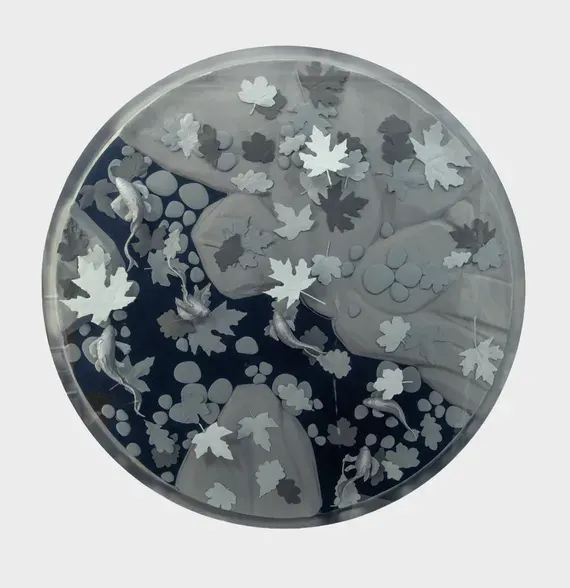
Hans Op De Beeck
Autumn Pond
2025
Mixed Media
115 x 115 x 13.5 cm
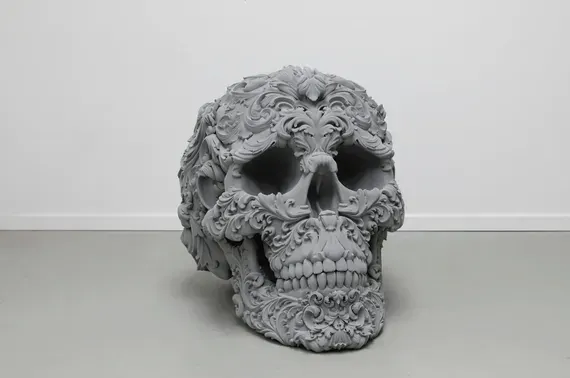
Hans Op De Beeck
Calavera
2026
Mixed Media
99.6 x 94.8 x 134 cm
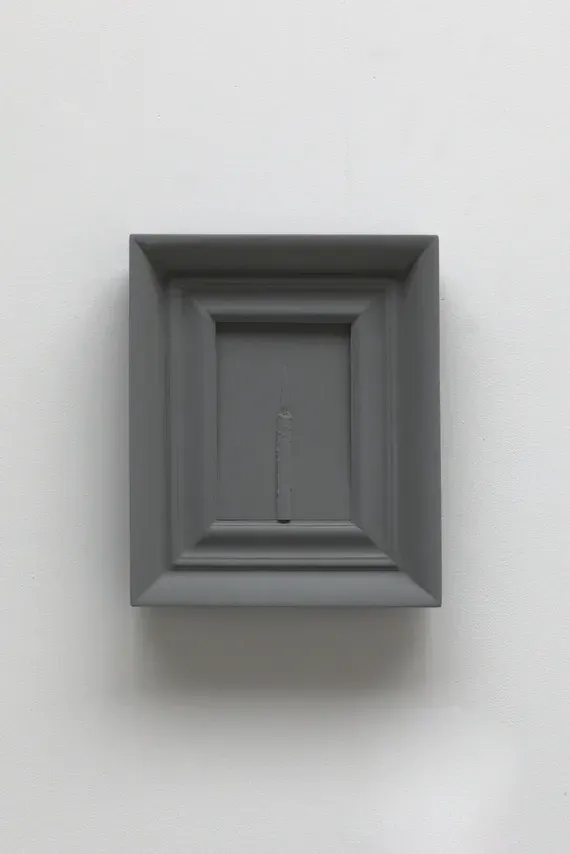
Hans Op De Beeck
Candle
2026
Polyamide, wood and coating
30 x 25 x 6.3 cm
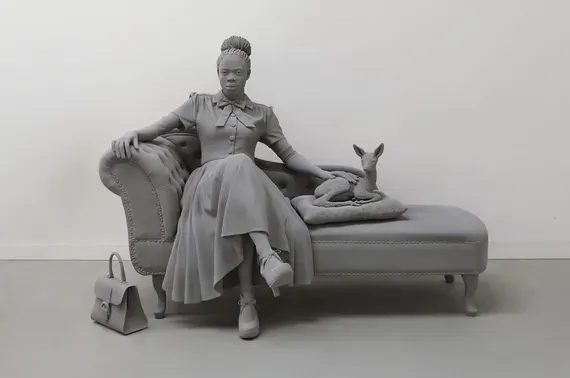
Hans Op De Beeck
Cécile
2026
Polyester, polyamide and coating
125 x 170 x 120 cm
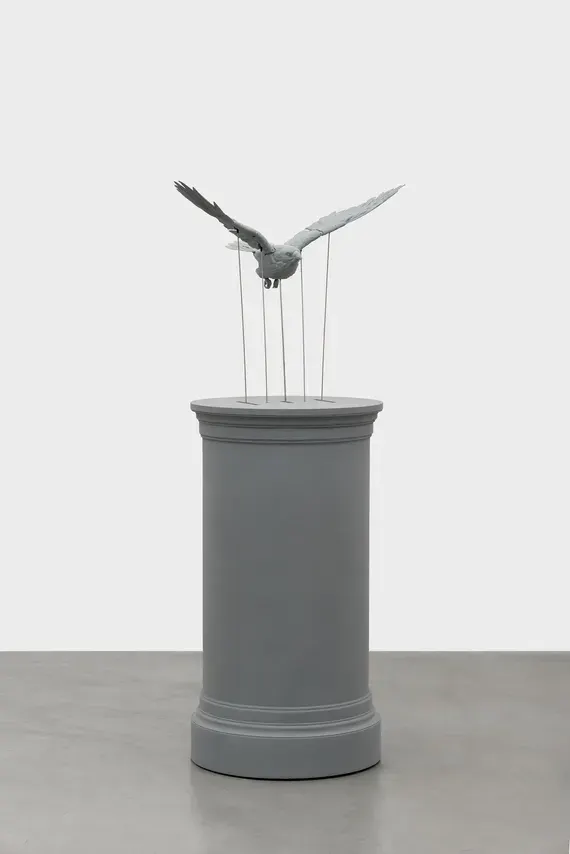
Hans Op De Beeck
Crow
2025
Mixed Media
160 x 56 x 80 cm
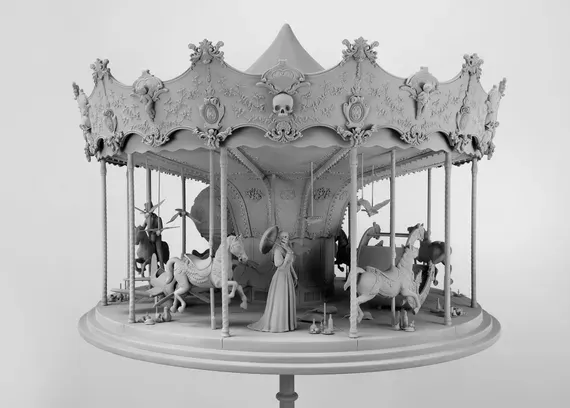
Hans Op De Beeck
Danse Macabre (small version)
2023
Mixed Media
170 x 92 x 92 cm
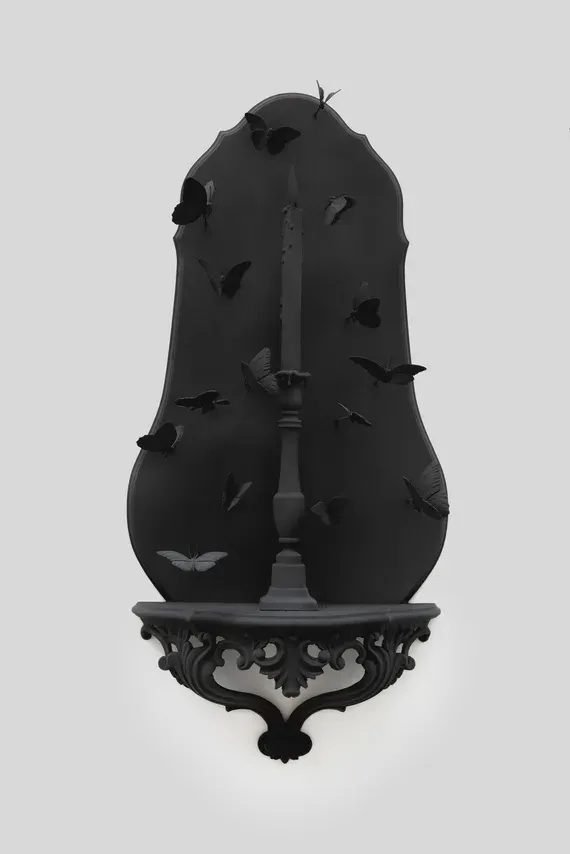
Hans Op De Beeck
Doom Candle
2026
Mixed Media
84 x 42 x 16 cm
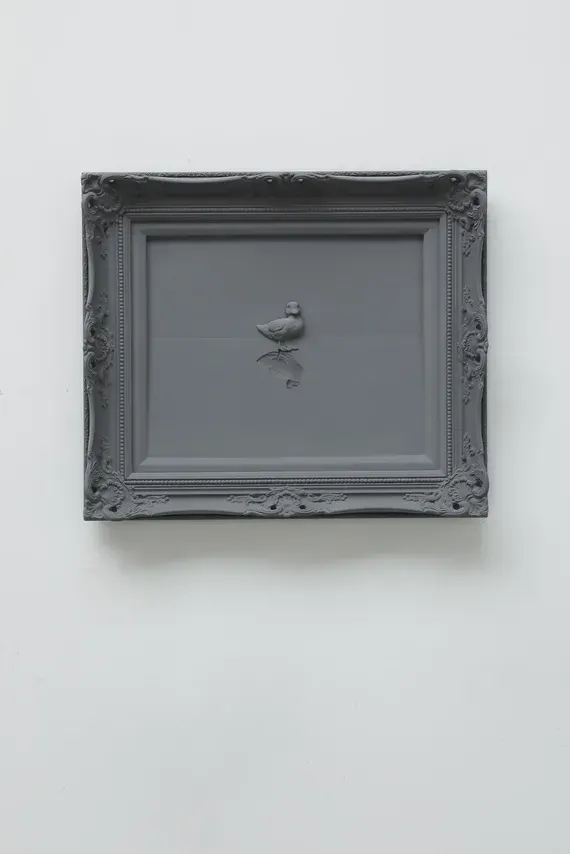
Hans Op De Beeck
Duck
2026
Polyamide, wood and coating
61 x 71 x 7 cm
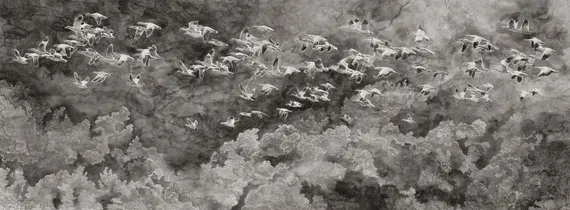
Hans Op De Beeck
Flock of birds
2026
Black-and-white watercolour on Arches paper in wooden frame
106 x 285 cm112.9 x 291.9 x 4.6 cm (incl frame)
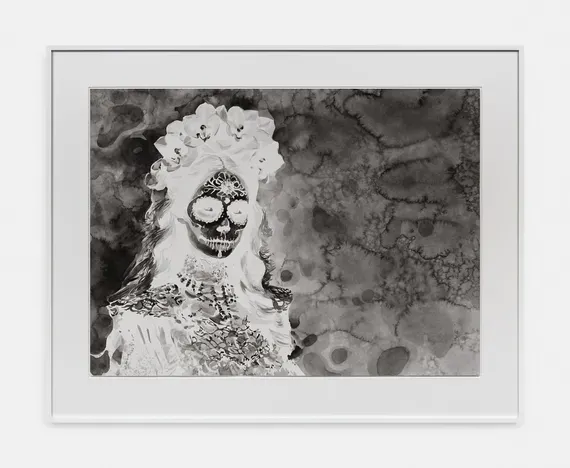
Hans Op De Beeck
La Catrina (1)
2026
Black-and-white watercolour on Arches paper in wooden frame
57 x 76 cm80.9 x 99.4 x 4.5 cm (incl frame)
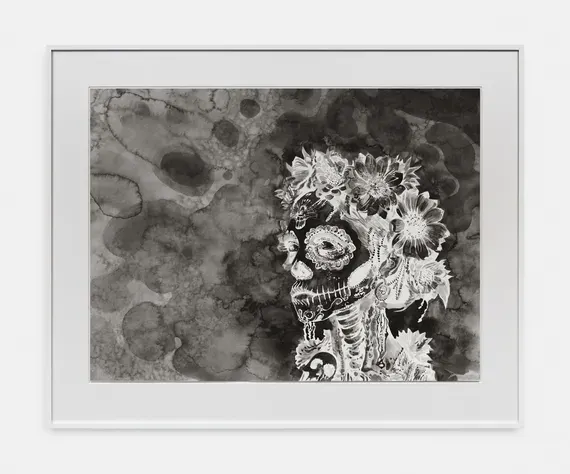
Hans Op De Beeck
La Catrina (2)
2026
Black-and-white watercolour on Arches paper in wooden frame
57 x 76 cm80.9 x 99.4 x 4.5 cm (incl frame)
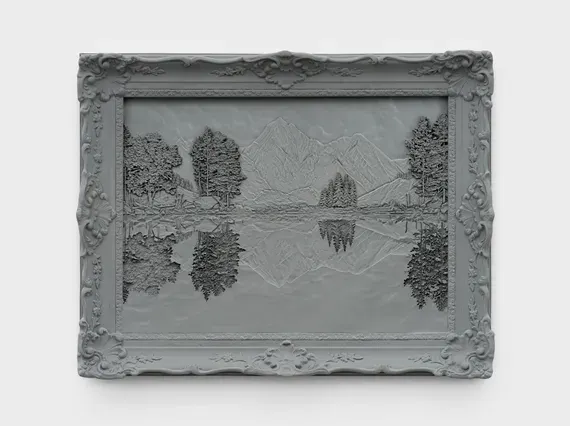
Hans Op De Beeck
Lakescape
2025
Polyester, metal and coating
65.5 x 83.5 x 9.5 cm
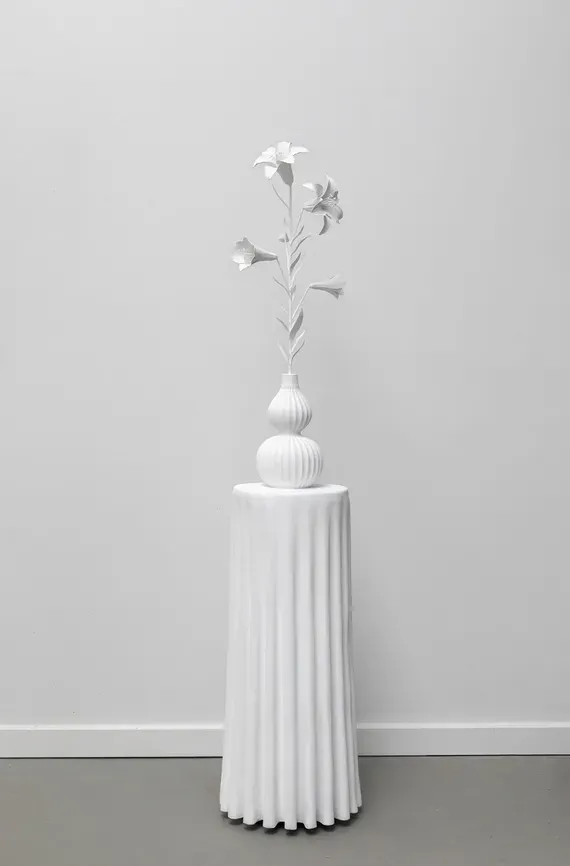
Hans Op De Beeck
Lily (White)
2026
Mixed Media
180 x 39 x 39 cm
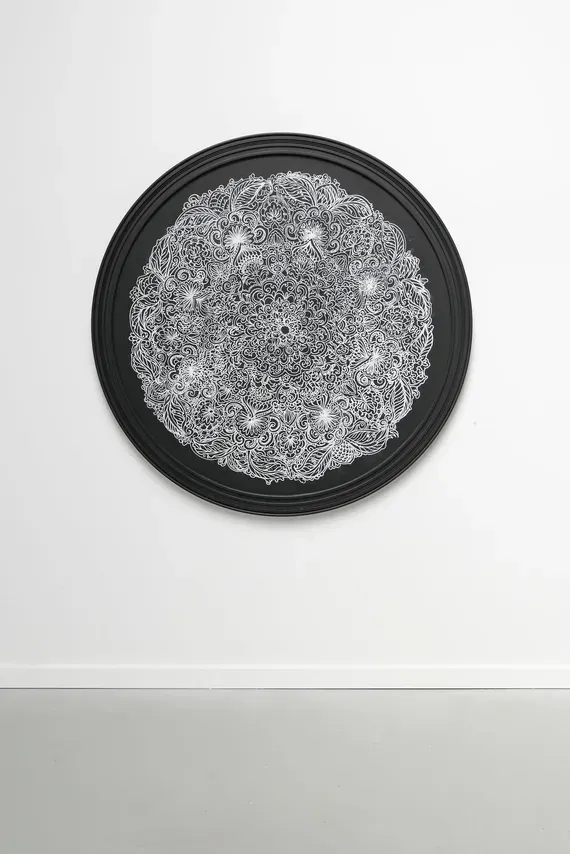
Hans Op De Beeck
Mandala
2026
Wood, coating and chalk marker
160 x 160 x 4 cm
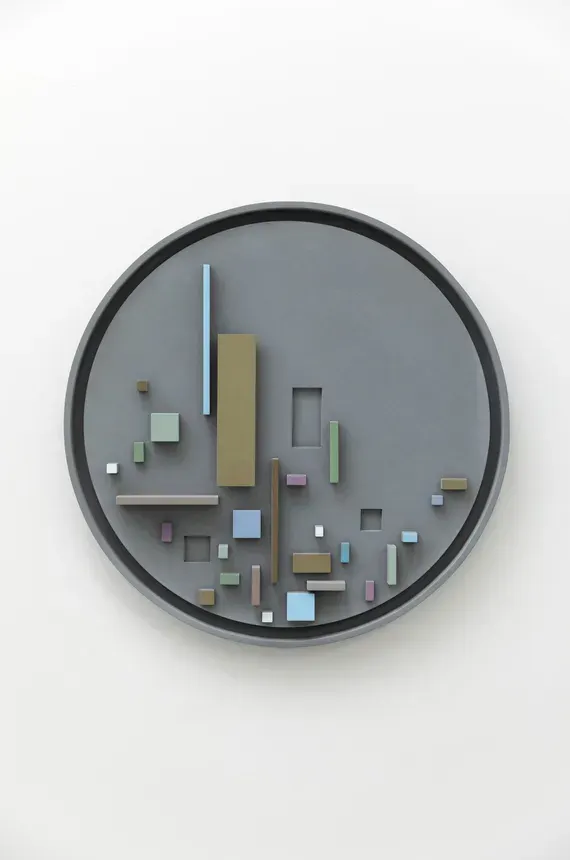
Hans Op De Beeck
Modernistic Wall Piece (a silent conversation with Philippe Van Snick) (1)
2025
Wood and paint
90.5 x 90.5 x 6 cm
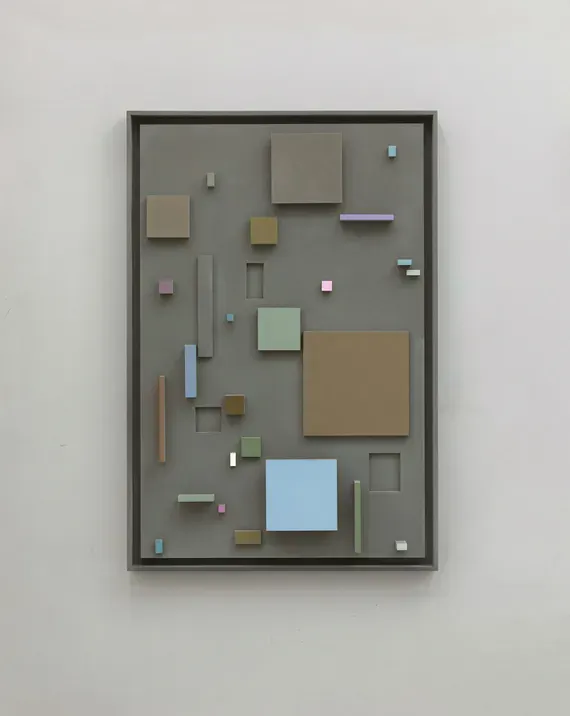
Hans Op De Beeck
Modernistic Wall Piece (a silent conversation with Philippe Van Snick) (3)
2025
Wood and paint
120 x 90 x 6 cm
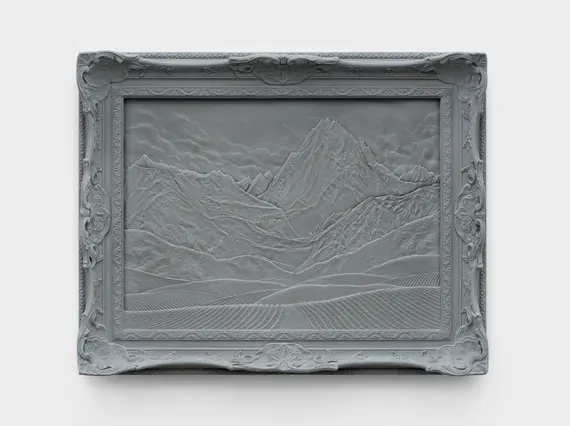
Hans Op De Beeck
Mountainscape
2024
Polyester, metal and coating
81 x 103 x 13.5 cm
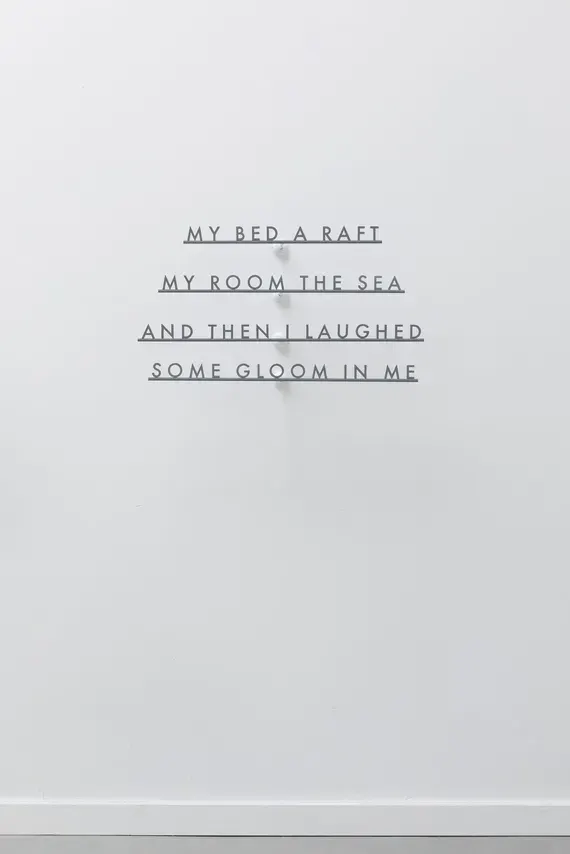
Hans Op De Beeck
My Bed, a Raft
2026
Metal and coating
40 x 72 x 21 cm
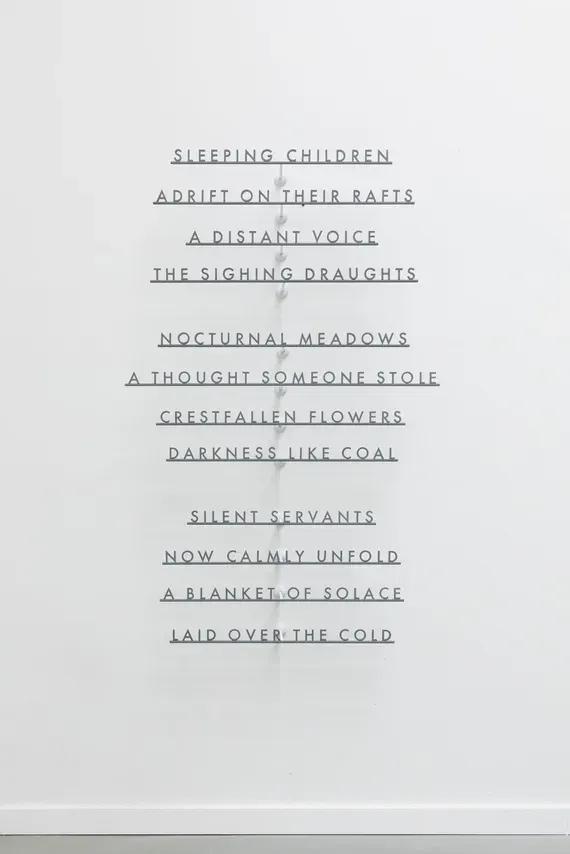
Hans Op De Beeck
Nocturnal Meadows
2026
Metal and coating
150 x 96 x 21 cm
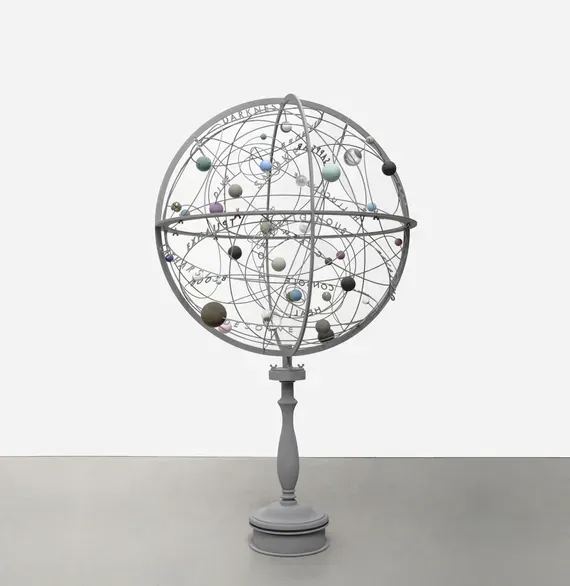
Hans Op De Beeck
Orrery (Loss)
2025
Mixed Media
232 x 130 x 130 cm
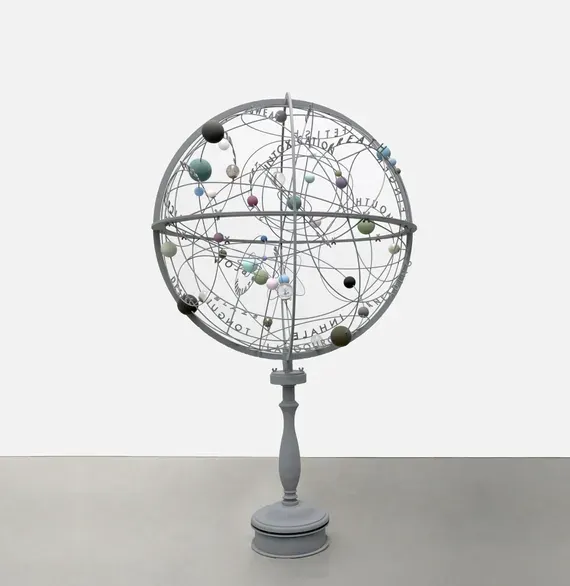
Hans Op De Beeck
Orrery (Lust)
2025
Mixed Media
232 x 130 x 130 cm
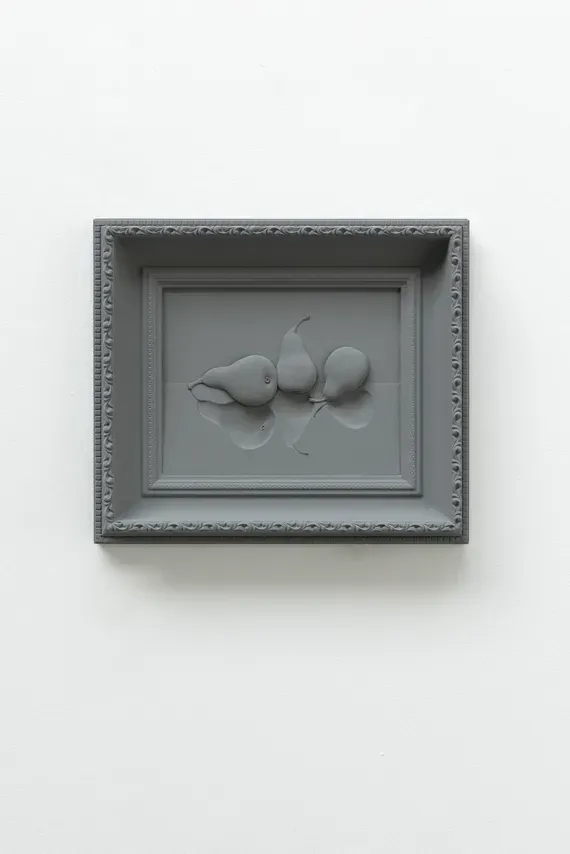
Hans Op De Beeck
Pears
2026
Polyamide, wood and coating
32 x 37 x 6 cm
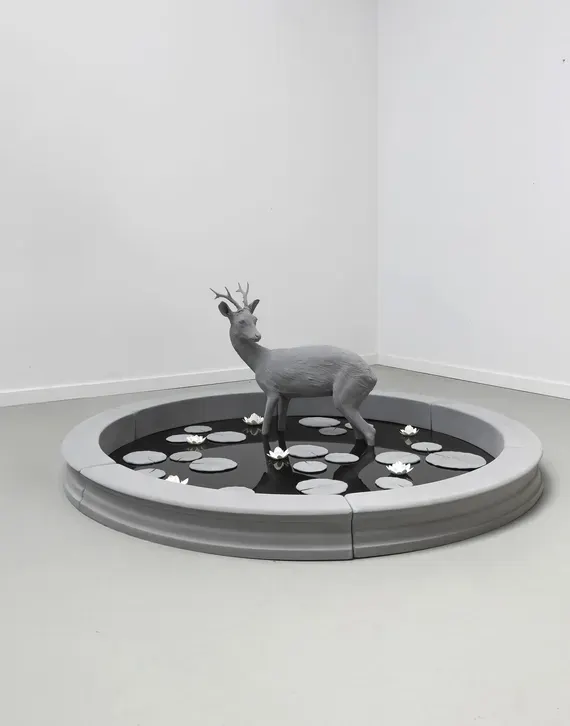
Hans Op De Beeck
Pond (Roe Deer)
2026
Mixed Media
50 x 200 x 200 cm
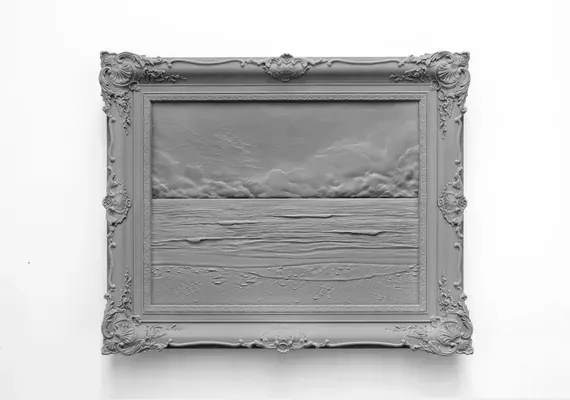
Hans Op De Beeck
Seascape
2022
Polyester, metal and coating
101 x 122 x 7.5 cm