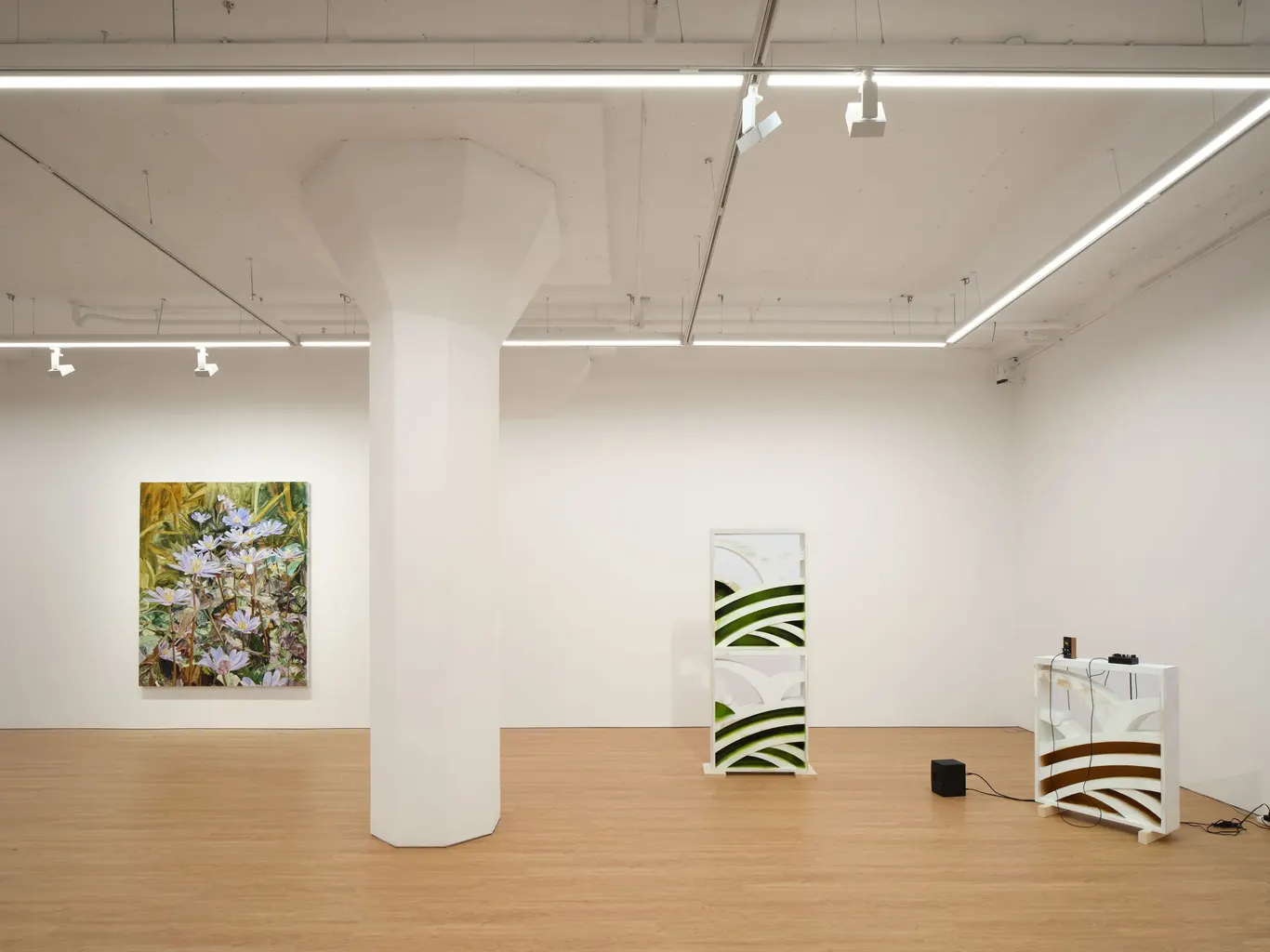
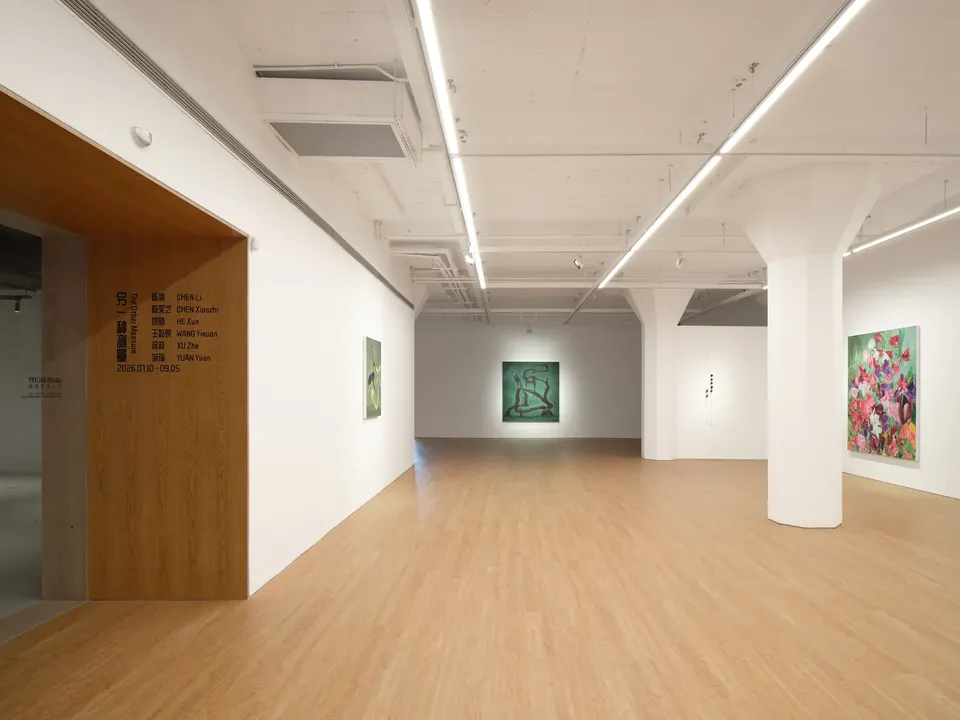
July 10 to September 5, 2026
Arario Gallery, 2F-205, 30 Wen'an Road, ShanghaiTuesday – Saturday 11am – 6pm
We live in a world accustomed to measurement. Minerals are designated as reserves, plants are assigned to genera and species, subterranean spaces are mapped as energy grids, and the earth’s surface is organized into transportation and logistics networks. The earth appears already measured, classified, and named. Yet when we trace the histories of these ways of knowing, we find that they are far from neutral forms of knowledge. Rather, they are processes through which reality is organized and order is produced.
Since the seventeenth century, alongside colonial expansion and the formation of global trade networks, European naturalists began systematically documenting and cataloguing plants, animals, minerals, and landscapes from around the world. Observers such as Georg Eberhard Rumphius spent years recording the natural world across the islands of Southeast Asia, producing notebooks that combined meticulous morphological descriptions with poetic imagination and personal experience. Later, Carl Linnaeus established a systematic taxonomy that brought nature into a clear, reproducible, and transmissible system of classification. At the same time, maps, images, specimens, archives, and commodity packaging gradually became essential tools for knowing and circulating the world. From poetic observation to standardized numbering, from lived experience to abstract systems, the earth ceased to be merely an environment inhabited by humans and became something that could be measured, recorded, displayed, and exchanged.Yet measurement is never an endpoint, nor is it the only way of knowing. Before these epistemic systems emerged, encounters between humans and the earth unfolded more slowly and with greater uncertainty. Even after such systems took hold, the experiences and forms of perception they excluded never entirely disappeared. Our understanding of the world is not completed once and for all; it is continuously shaped through the interplay of history, power, technology, and circulation, while being repeatedly unsettled and rewritten through the echoes of ruins, new forms of growth, and the overflow of feeling.Titled The Other Measure, this exhibition considers “measurement” not only as scientific calculation or quantification, but also as the acts of naming, classifying, recording, mapping, and displaying through which humans come to understand the world. Rather than offering a broad account of the Anthropocene, the exhibition approaches these questions through specific materials, images, sounds, and embodied experiences. In doing so, it asks how systems of knowledge shape our relationship with the earth, and whether other modes of perception and understanding might exist beyond them.The six participating artists approach this theme from distinct perspectives. C****HEN Xiaozhi takes spices such as clove, ginger, and nutmeg as points of departure, layering botanical illustrations, maritime maps, and trade routes onto mirrored glass surfaces. Her works trace how things once embedded within local ecologies and everyday life are continually redefined through surveying, classification, and global trade networks. C****HEN Li’s works revolve around moths, pond snails, and crab floss. The pond snail, a familiar species from her hometown, carries both local memory and personal experience; moths and crab floss evoke childhood imaginings of unfamiliar windows and the unknown lives concealed behind them. In her practice, living creatures become not only natural beings but also emotional vessels onto which meanings are continually projected and transformed. HE Xun explores the relationship between Buddhist seed syllables and sound, bringing together seeds, letters, and vocalization. Existing prior to linguistic meaning, these vowels and symbols function as a medium between bodily perception and spiritual experience, suggesting an alternative path of understanding that exceeds naming and classification. W****ANG Yiquan draws upon export commodity packaging, printed imagery, and trade archives to examine how nature is reshaped through circulation and representation. As plants, landscapes, and natural products are transformed into visual motifs on commercial packaging, they become embedded within systems of production, trade, and image-making. X****U Zhe’s sound installation begins with archival materials from residential architecture of the 1970s and 1980s. Through reconstructed architectural ornamentation, sound devices, and memory-based imagery, the work places personal experience alongside collective aspirations of its era. Within the traces left behind by architecture, fragments of memory, visions of the future, and the residues of everyday life are brought back into presence. YUAN Yuan constructs a female utopia composed of flowers. Figures appear in floral form, growing and proliferating within intensely saturated fields of colour. Exceeding fixed identities and categories, they form an open and expansive landscape of life.The exhibition unfolds as a layered structure concerned not only with how knowledge is constructed, but also with how it loosens, transforms, and becomes available to sensation once again. When the measures through which we habitually understand the world are slowed down, questioned, and pushed to their limits, how might the earth, living beings, and material things appear differently? The exhibition invites visitors to pause among these works and attend to what remains unnamed, unmeasured, or perhaps no longer measurable at all.
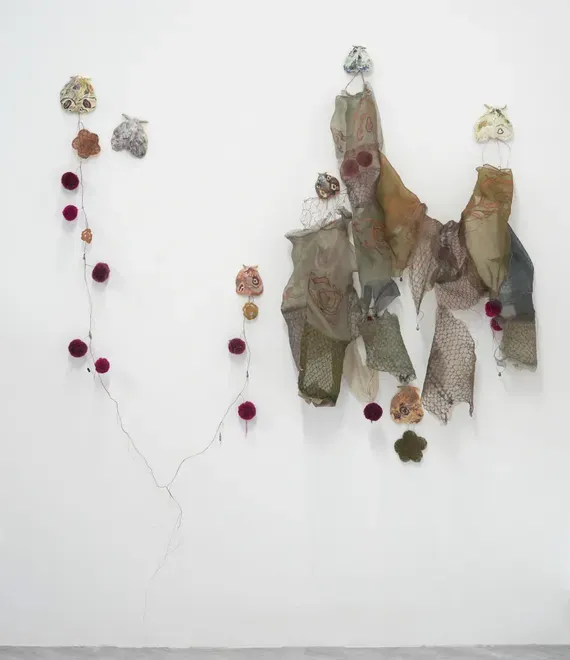
Chen Li
Exhausting the Windows 去穷尽窗
Dyed silk, sewing thread, copper wire, fishing sinkers, yarn, copper plate, glazed ceramic, natural lacquer
140 x 175 x 20 cm
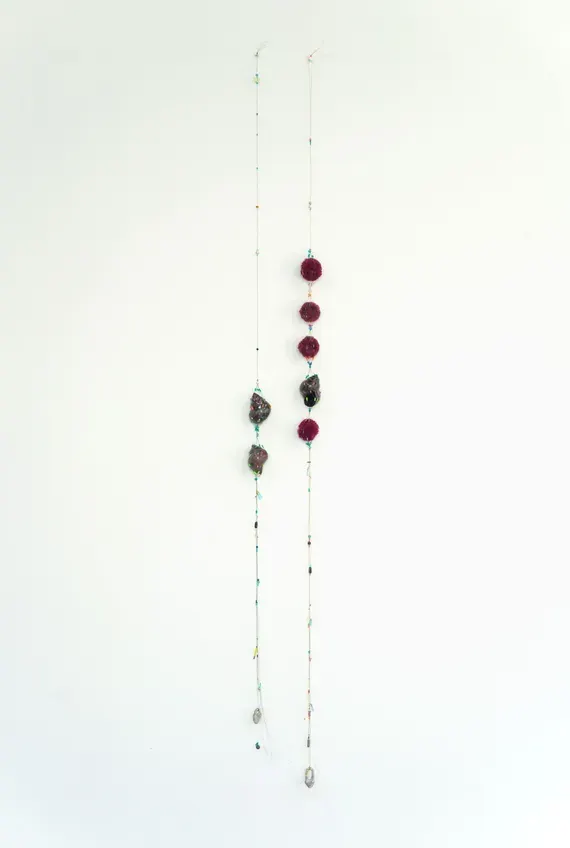
Chen Li
The Snail’s Veil Ⅱ 螺的网纱系列二
2026
Fishing line, pearls, beads, lacquered river snail shell, yarn, bobber stops, fishing sinkers, ceramic pieces
150 x 20 x 5 cm
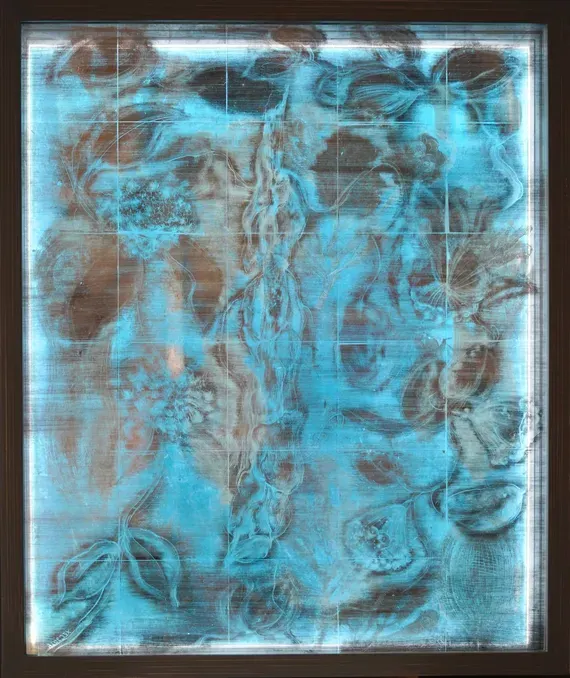
Chen Xiaozhi
Aromatic Body I: Clove and the Sea 丁香与海
2026
Verre églomisé on tempered glass and acrylic, silver leaf, colored foil, COB LED lighting system 灯箱镜面作品, 银箔, 彩箔, 钢化玻璃, 有机玻璃, COB LED照明设备
63 x 53 x 14 cm
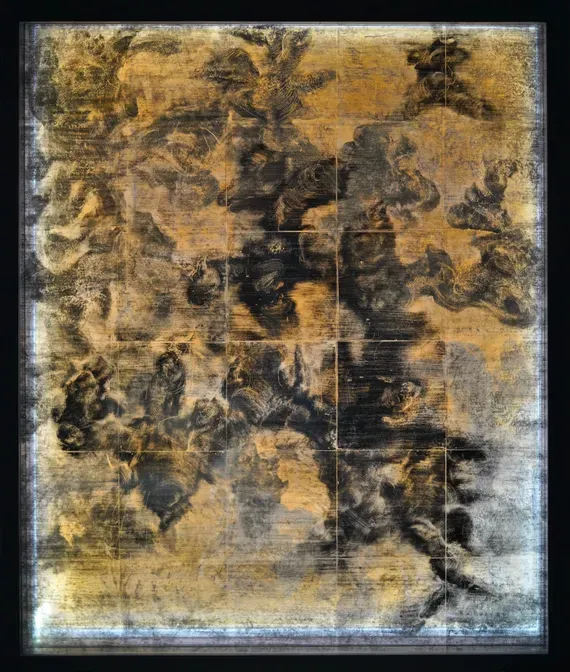
Chen Xiaozhi
Aromatic Body II: The Spreading Body 蔓延的躯干
2026
Verre églomisé on tempered glass and acrylic, silver leaf, colored foil, COB LED lighting system 灯箱镜面作品, 银箔, 彩箔, 钢化玻璃, 有机玻璃, COB LED照明设备
63 x 53 x 14 cm
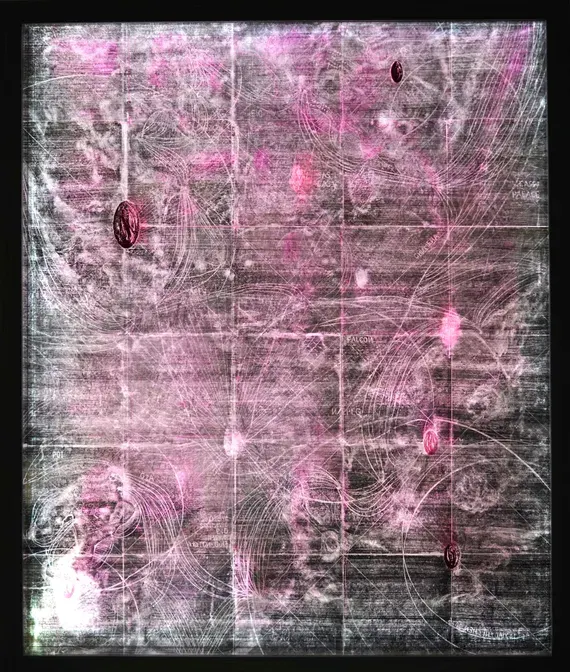
Chen Xiaozhi
Aromatic Body III: Interior island 内部之岛
2026
Verre églomisé on tempered glass and acrylic, silver leaf, colored foil, COB LED lighting system 灯箱镜面作品, 银箔, 彩箔, 钢化玻璃, 有机玻璃, COB LED照明设备
63 x 53 x 14 cm
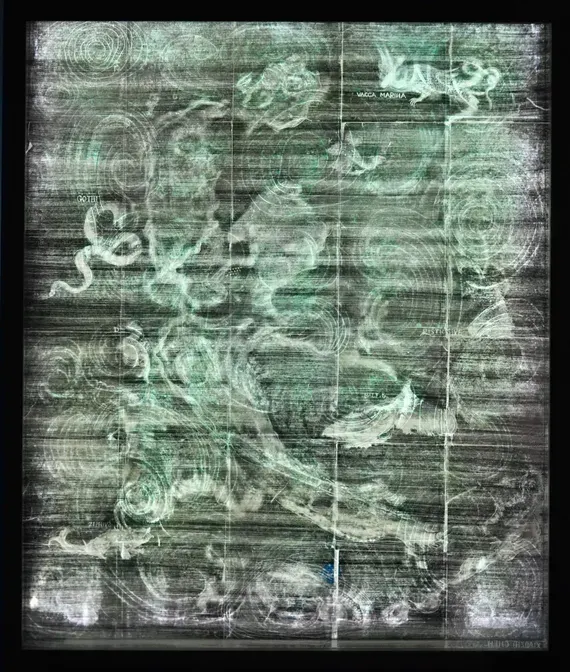
Chen Xiaozhi
Aromatic Body IV: Kulilawan and Sea Monsters Kulilawan与海怪
2026
Verre églomisé on tempered glass and acrylic, silver leaf, colored foil, COB LED lighting system 灯箱镜面作品, 银箔, 彩箔, 钢化玻璃, 有机玻璃, COB LED照明设备
63 x 53 x 14 cm
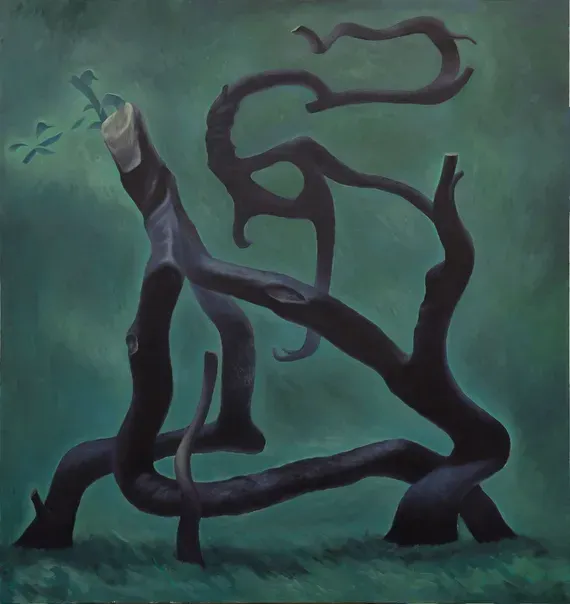
He Xun
Seed-Iga (large) 种子-lga (大)
2024
Oil on canvas
180 x 170 cm
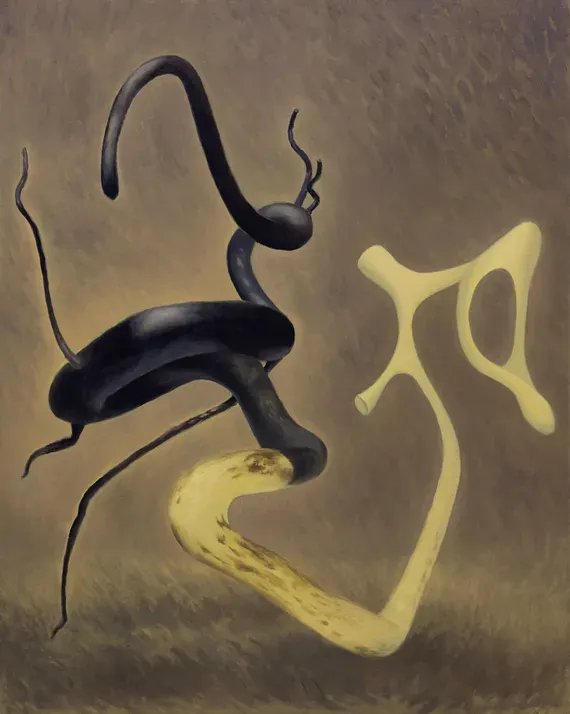
He Xun
Seed-Ka 种子-Ka
2022
Oil on canvas
100 x 80 cm
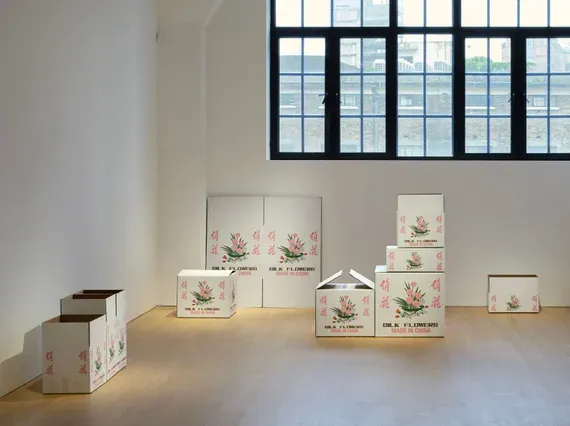
Wang Yiquan
Packaging Research: Shanghai Silk Flower 包装研究:上海真丝绢花
2026
Installation, cardboard boxes, artist’s patterns, digital printing, adhesive tapes, each box specification varies 装置,⽡楞纸箱,艺术家设计图案,数码打印,㬵带,纸箱规格各异
30 x 30 x 40 cm
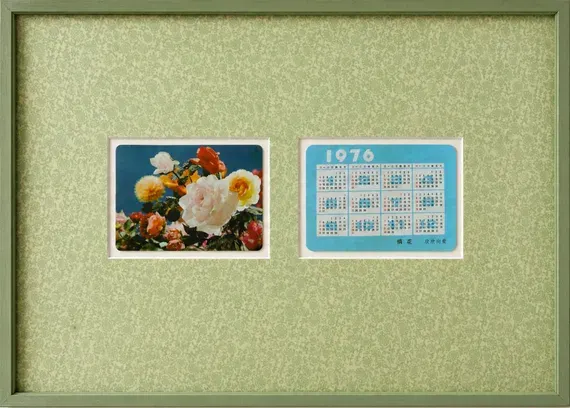
Wang Yiquan
Thriving with Prosperity 欣欣向荣
2026
Mixed media, found calendar, old printed decorative paper, archival pigment print, artist-painted frame with acrylic paint
45 x 60 cm
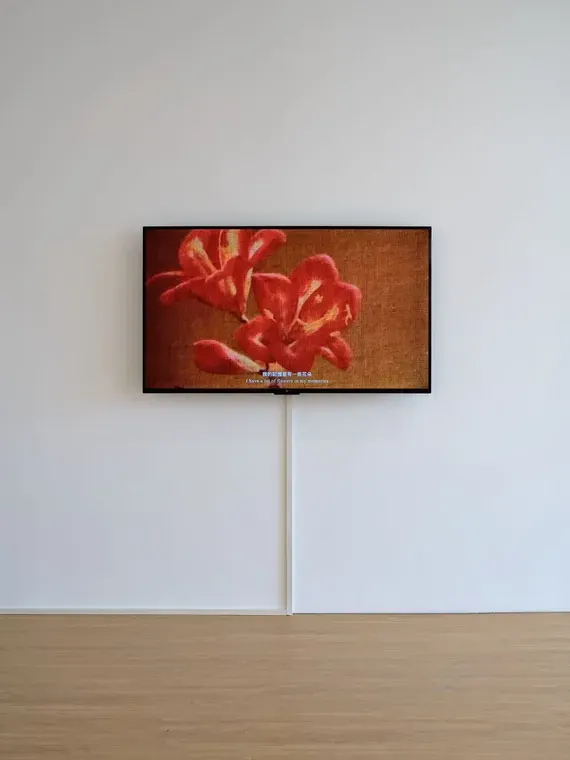
Wang Yiquan
Very Personal 非常私人
2022
HD digital video, colour, sound
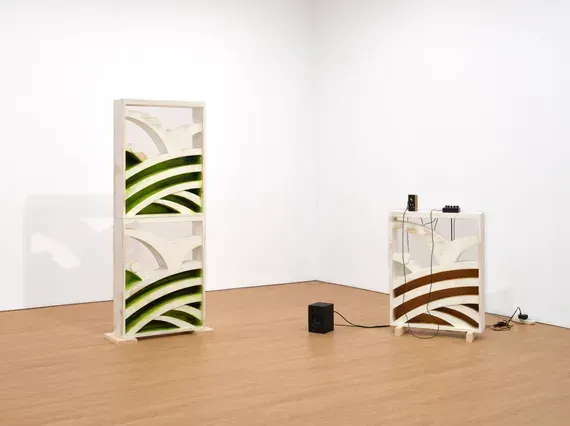
Xu Zhe
Experiential Architecture #1 经验建筑 1
2024
Mixed media installation
1 x 1 x 1 cm
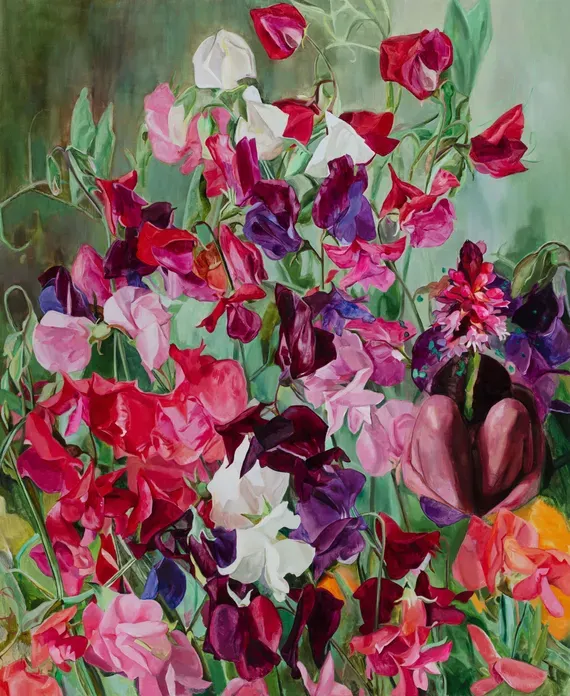
Yuan Yuan
The Last of Us: Pea Flower 美好末日:豌豆花
2023
Oil on canvas
195 x 160 cm
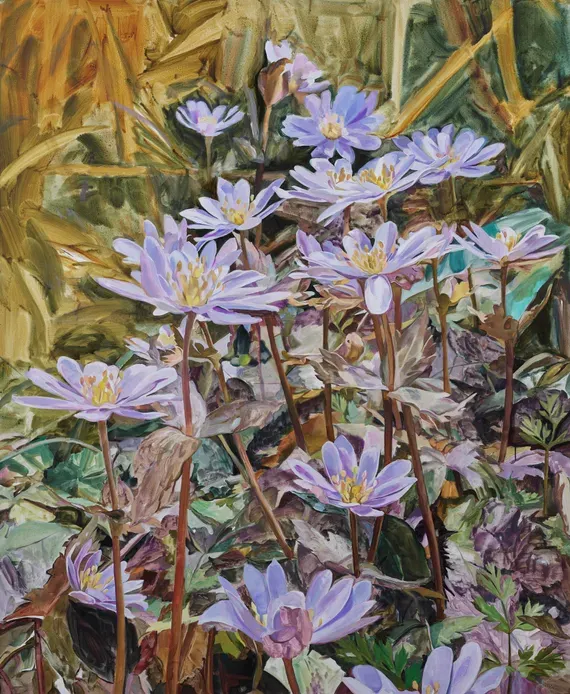
Yuan Yuan
The Last of Us: Spring Snowflake 美好末日: 雪割草
2026
Oil on canvas
195 x 160 cm
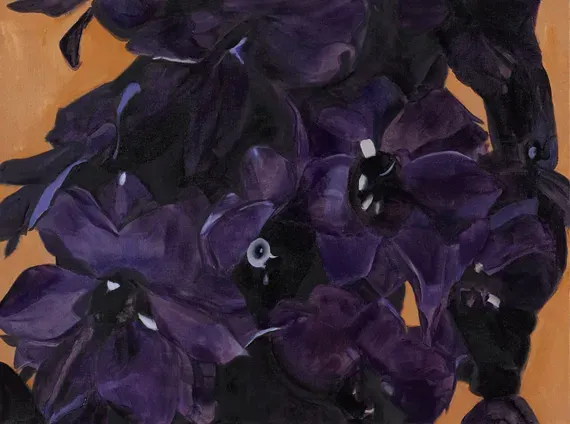
Yuan Yuan
Dark Purple 深紫
2022
Oil on canvas
60 x 80 cm