Tuesday – Saturday 10am – 6pm
I think I’m an inquisitive person. And I am ambiguous, completely. My pieces are all ambiguous. They don’t deliver the truth directly but show an open vision. — Leonilson, 10 December 1992
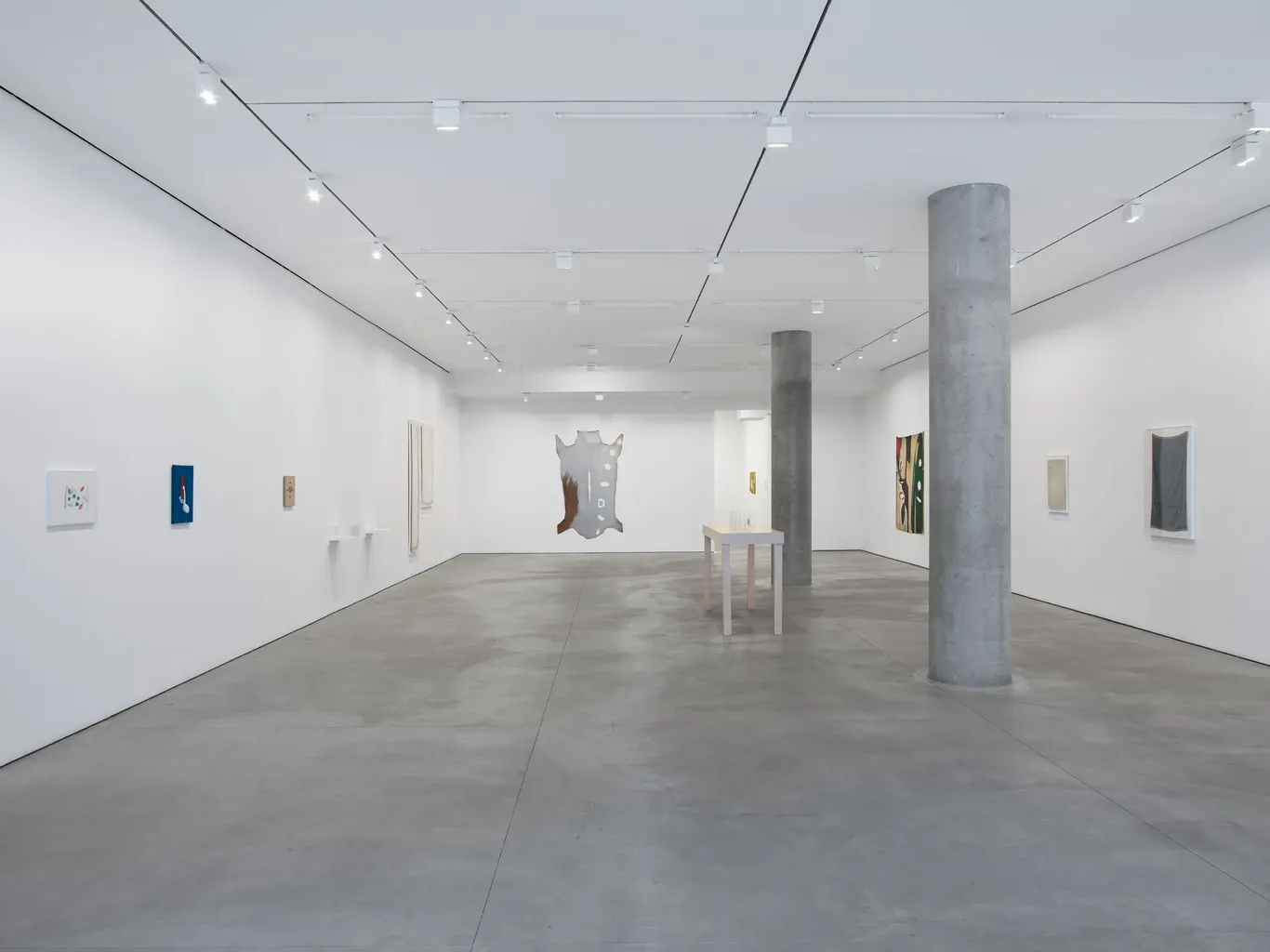
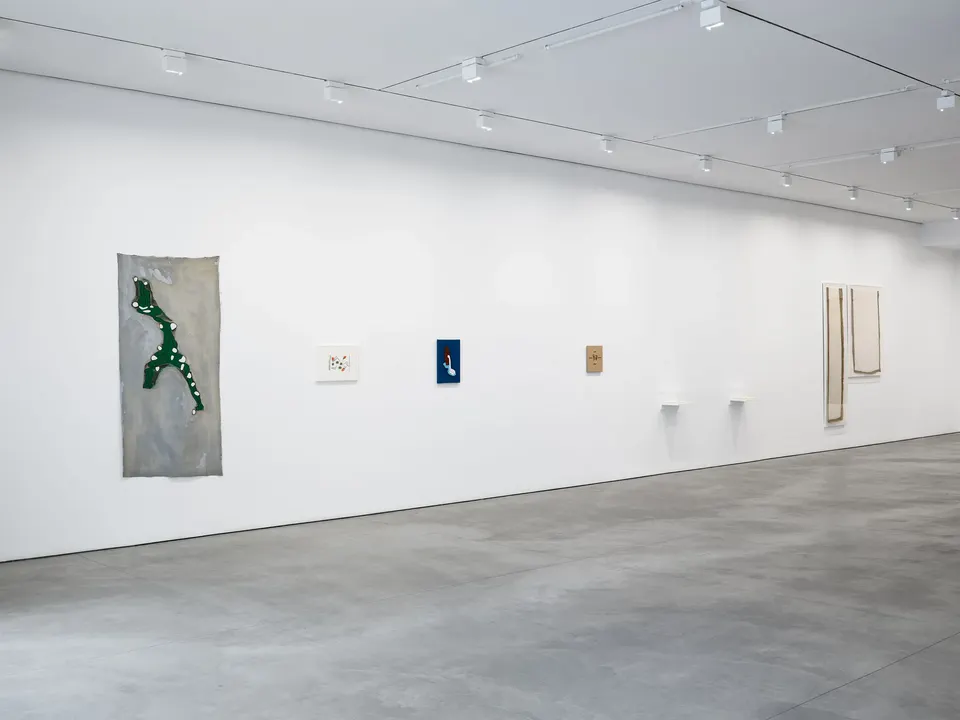
Lisson is pleased to announce an exhibition of works spanning the short, prodigious career of Brazilian artist José Leonilson (1957-1993). Organised in collaboration with Projeto Leonilson and Almeida & Dale, the presentation traces the origins and evolution of his art, from the mixed-media assemblages of the mid-1970s to the stylistic plurality of his drawings and paintings of the 1980s, through to the small-scale embroidery works that followed his HIV diagnosis in 1991.Generally known – in his lifetime and since – as singularly Leonilson, the artist came of age during a formative period in Brazilian art and society; 1985 marked the end of the country’s twenty-one-year military dictatorship and the onset of a new phase of creative freedom. From an early age, he was influenced by the experimentalism of a previous generation of artists, including Hélio Oiticica, Lygia Clark and Mira Schendel. Along with contemporaries associated with the Geração 80 movement, such as Leda Catunda and Beatriz Milhazes, Leonilson built on these forebearers’ gradual turn away from the conceptualist precepts of the 1960s toward a more poetic, subjective mode of expression.Across two decades of production, Leonilson drew freely from literature, travel, art history and his own lived experience, creating an iconography that is at once intimate and universal. His works weave together references to artists including Eva Hesse, Joseph Beuys, Blinky Palermo and Paul Klee. Throughout the exhibition, motifs of maps, vessels, windows, bodies, and handwritten text emerge as recurring symbols through which the artist explores longing, vulnerability, spirituality and belonging.Textiles occupy a central place within Leonilson’s practice. The son of cloth merchants, the artist was fascinated from early childhood by textiles and sewing: close to the end of his life, he spoke of the formative influence of “my mother’s embroidering at home every day.” He made his first assemblage in 1972, aged in his mid-teens. Mirro [Mirror] (1975) is a close approximation of this first work: a fragment of a pair of jeans has been fixed to the base of a shallow wooden box. Embroidered into the fabric are two pieces of felt, arranged in a cruciform. On a separate piece of felt, the embroidered word MIRRO (a corruption of the French mirroir) appears upside-down. Glazed to form a sealed container, the assemblage suggests a reliquary or one of the shadow boxes of Joseph Cornell. The scrap of clothing has transfigured into a symbolic, faintly sacralised double of the artist’s real life.Leonilson developed a personalised iconography that was by turns romantic, dreamlike and quotidian. His drawings and paintings of the 1980s bear witness to a restlessly inventive approach. Frequent travels to Europe and the United States during this time exposed Leonilson to the work of Keith Haring, Jean-Michel Basquiat and Kenny Scharf, whose graphic visual languages and synthesis of personal symbolism, popular culture and urban experience informed his own evolving vocabulary. Works from the 1980s translate daily and earthly spectacles – a car with giant tailfins, a patterned figure in a wallpapered room, rushing green rapids – into self-contained emblems, in styles ranging from the diagrammatic to the heraldic to the sensuously colouristic.In his final years, following his HIV diagnosis, Leonilson’s work turned increasingly inward without abandoning the symbolic imagery that had defined his paintings and drawings of the previous decade. Instead, the personal iconography of the 1980s became more explicit, politically charged and deeply intertwined with text as he embraced embroidery, textiles (including felt, velvet, silk, taffeta and everyday cotton sheets) and drawing after being forced to abandon toxic paints and work on a smaller scale. A series of works on view from 1990 exemplifies his use of embroidered words as a vehicle for intimate reflections on memory, identity and desire. Concurrently inspired by the work of Brazilian outsider artist Arthur Bispo do Rosário, whom he encountered in a landmark 1989 exhibition in Rio de Janeiro, Leonilson transformed Minimalist forms into deeply personal symbols. His late works embody the tension between isolation and defiant self-assertion: José (1991), for example, bears his name embroidered discreetly into one corner of a blank sheet of voile, while A.P. (díptico) (1991) features gold-painted, three-sided rectangles on translucent voile that evoke windows or empty vessels, balancing tactile presence with charged absence.Together, these works highlight the remarkable consistency of Leonilson’s vision, revealing how his distinctive language of images, text and textiles holds multiple contradictions in harmony: ambiguity and intimacy, pleasure and pain, freedom and restraint. Courtesy Lisson Gallery.
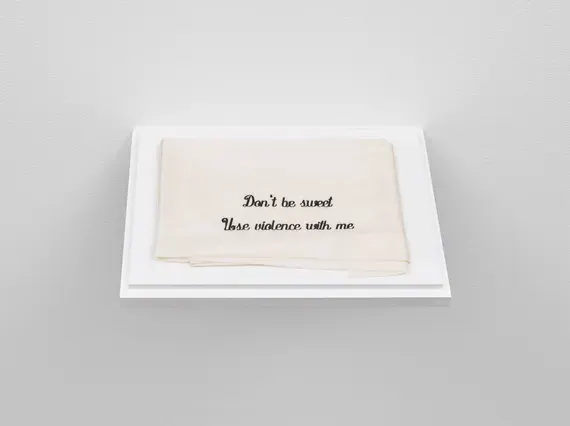
Jose Leonilson
[Don't be sweet; Use violence with me]
c. 1990
Thread on silk
21 x 30 cm
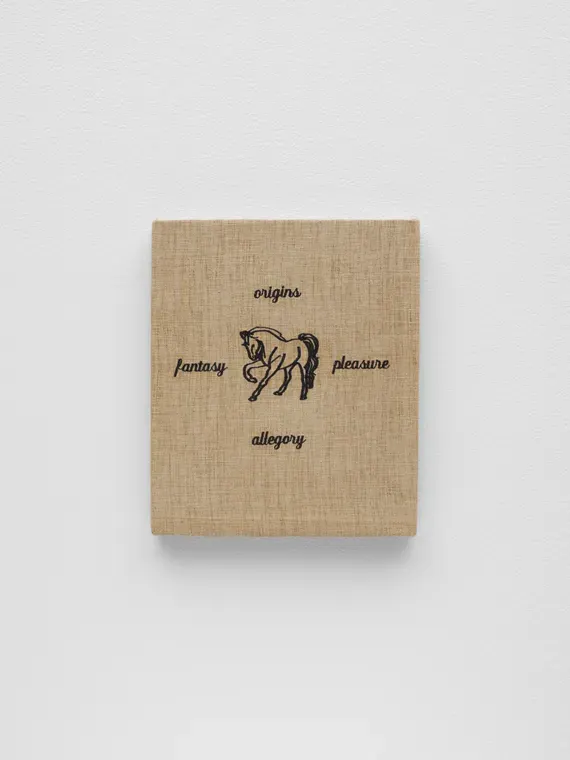
Jose Leonilson
[Origins; Fantasy; Pleasure; Allegory]
1990
Line on linen canvas
31.4 x 26.4 x 2.5 cm
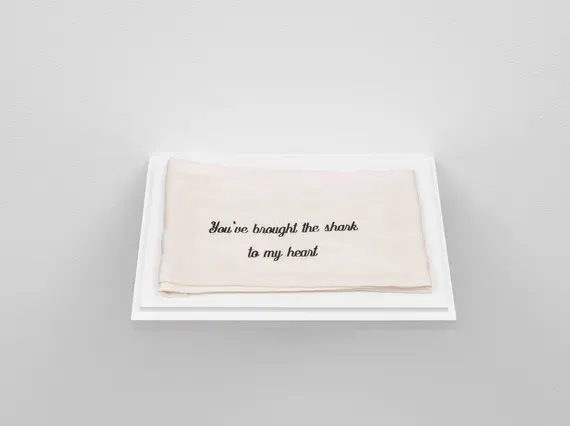
Jose Leonilson
[You've brought the shark to my heart]
c. 1990
Thread on silk
21 x 36 cm
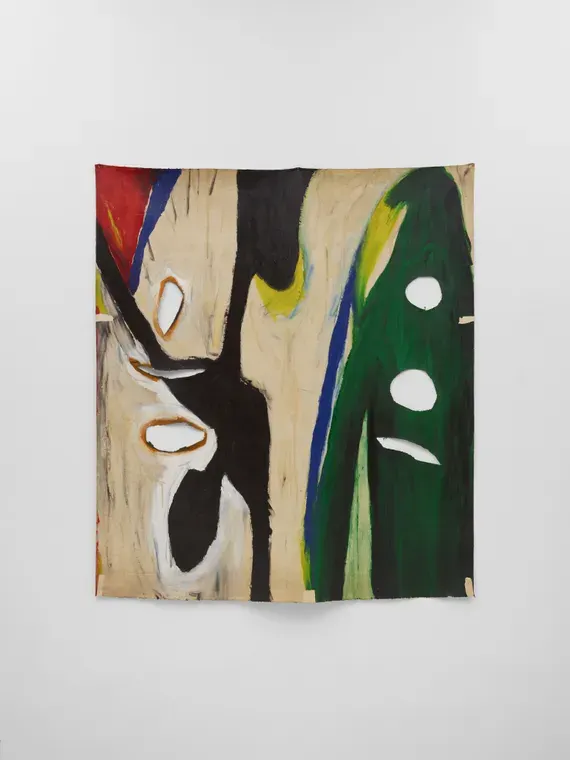
Jose Leonilson
A caída
1985
Acrylic paint and collage on canvas
180.3 x 156.2 cm
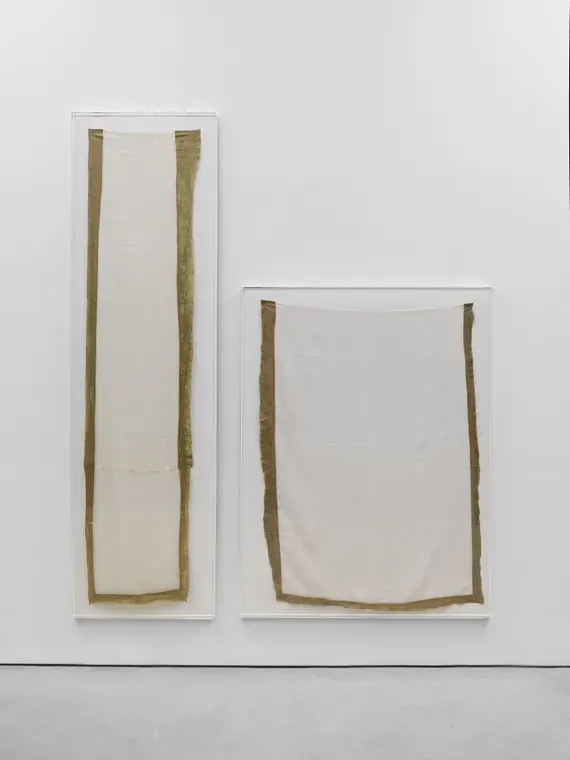
Jose Leonilson
A.P. (díptico)
1991
Metallic paint and thread on voile
208.3 x 48.9 cmDimensions variable
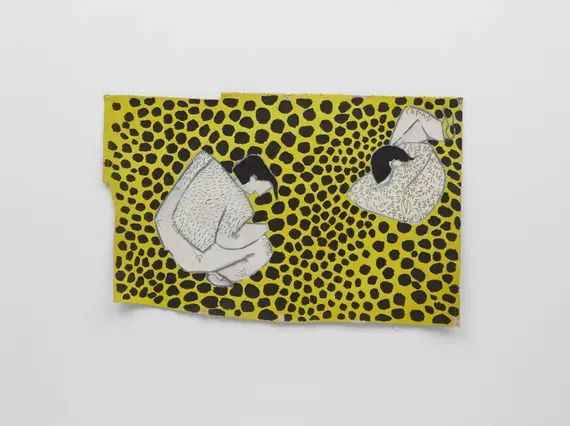
Jose Leonilson
Capaz / capaz
1983
Acrylic paint on canvas
64.1 x 99.7 cm
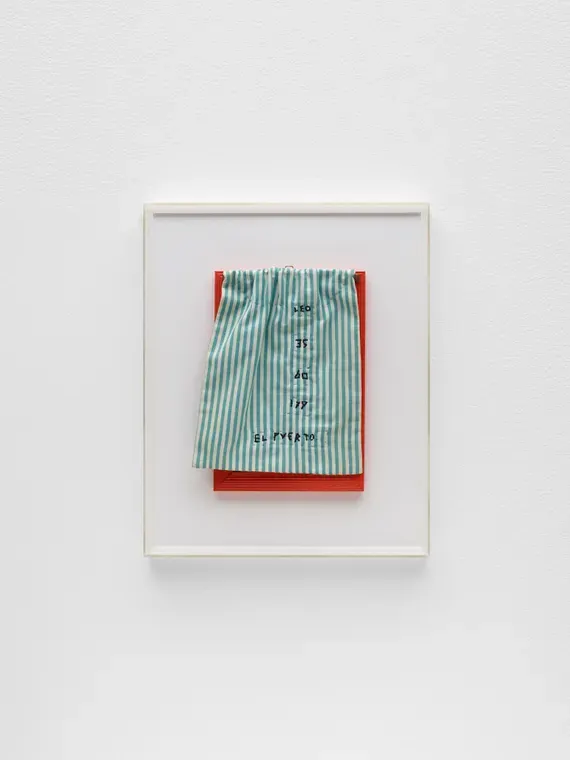
Jose Leonilson
El puerto
c. 1992
Thread on striped cotton fabric, nail, copper wire, and acrylic paint on a mirror frame
23.5 x 17.1 cm
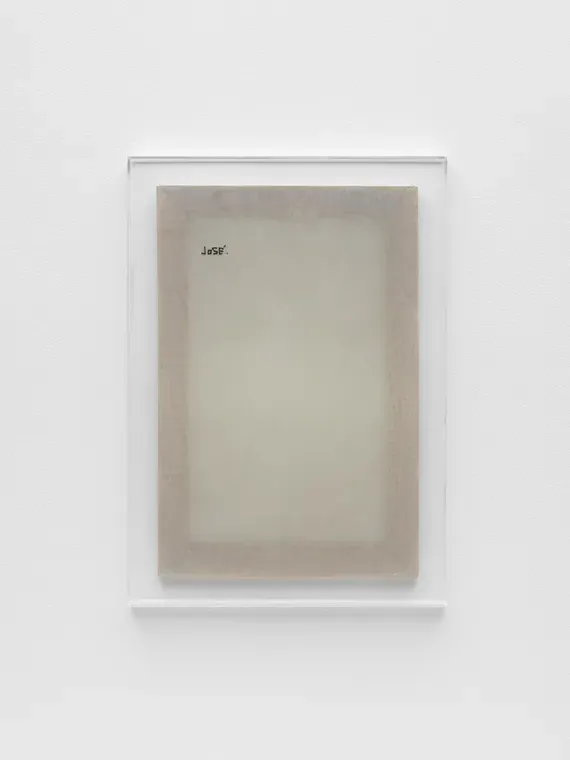
Jose Leonilson
José
1991
Line on voile
59.4 x 39.7 x 1.3 cm
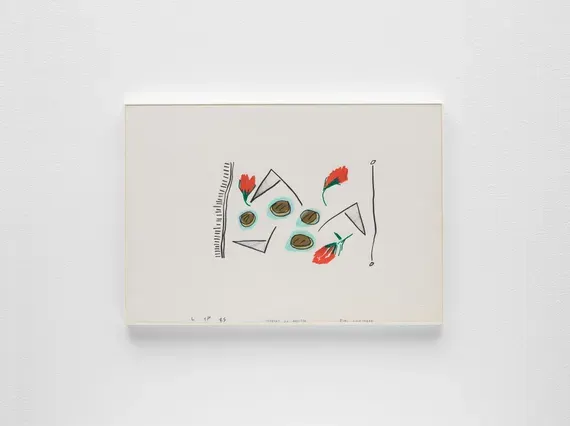
Jose Leonilson
Moedas de artista
1985
Coloured pencil, oil pastel, and metallic pencil on paper
33 x 48 cm
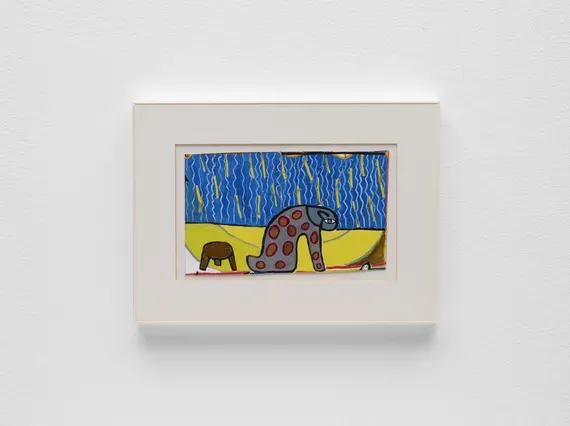
Jose Leonilson
Untitled
1982
Gouache, coloured pencil, and metallic paint on paper
12.7 x 21.3 cm
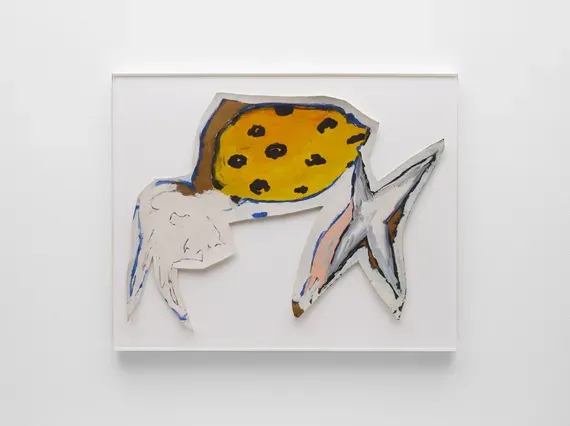
Jose Leonilson
Untitled
1983
Acrylic paint and metallic paint on cut cardstock
59.7 x 80.6 cm