Lê Phổ, Mai Trung Thu, Cao Đàm Vũ
October 10 to November 21, 2026
DE SARTHE, 2/F, Block A of Vita Tower,, 29 Wong Chuk Hang Road, Hong KongTuesday – Saturday 11am – 7pm
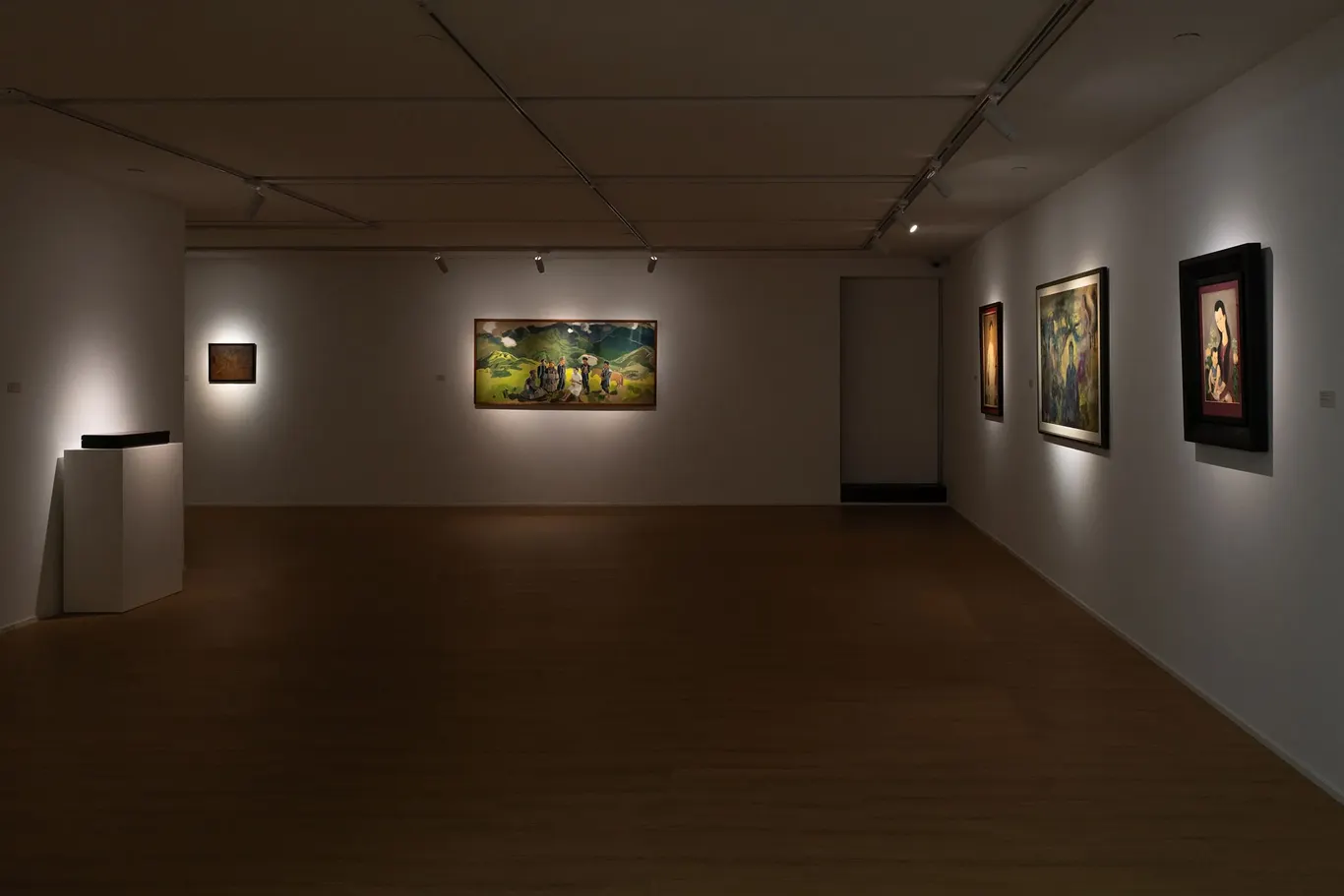
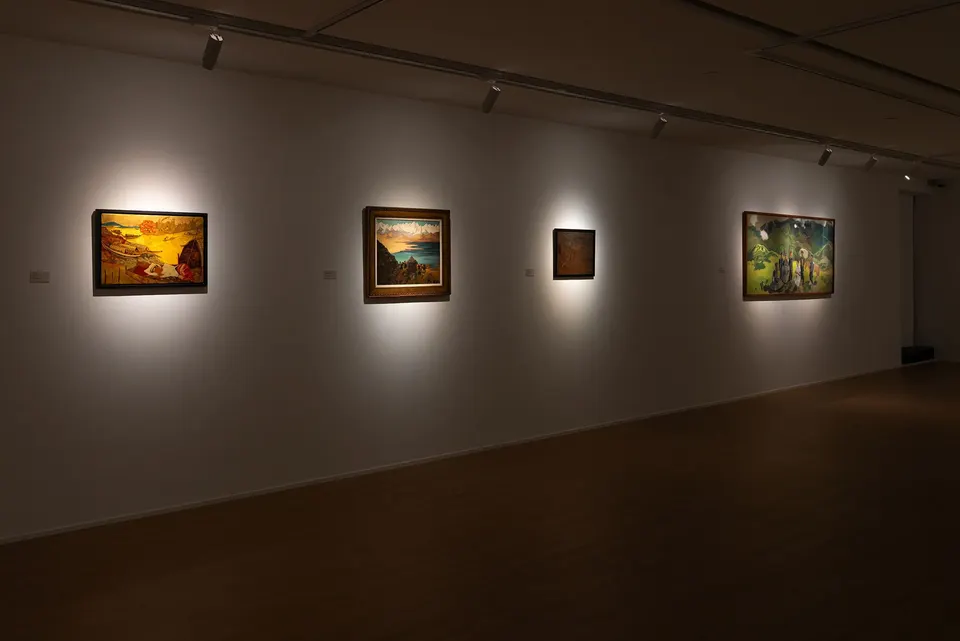
DE SARTHE is pleased to present Echoes of Tonkin: Vietnamese Modern Art, an exhibition tracing the formation of modern Vietnamese art from its precursors to its maturity. Spanning 1905 to 1960, it brings together works by Albert Cézard, Victor Tardieu, Léa Lafugie, Alix Aymé, Joseph Inguimberty, Pham Hau, Le Pho, Nguyen Gia Tri and Vu Cao Dam, alongside two Cham sculptures that recall the far older roots of art in the lands that now form Vietnam. The exhibition, co-curated by Leah Do and Tran Dinh Thuc Doan, opens on October 10 and runs through November 21, 2026.
Vietnamese modern art is widely collected and increasingly well studied, yet it is rarely shown with the context that explains why it looks the way it does. Marking the gallery’s second major survey of the field, Echoes of Tonkin challenges the clichés that reduce this art to a few familiar images and too often leave collectors with a narrow view of it. As gallery founder Pascal de Sarthe puts it, “Vietnamese modern art has long been admired for its charm. I believe it deserves to be studied for its substance, and to take its place in the wider history of twentieth-century painting alongside the movements it drew upon and transformed.”To that end, the curators have situated each work individually, so that its own history becomes legible before any broader narrative is imposed upon it. Arranged chronologically, though not as a straight line, the exhibition runs from precursor Albert Cézard, through Victor Tardieu’s founding of the École des Beaux-Arts de l’Indochine in Hanoi, to the silk and lacquer masterpieces of Vietnamese artists trained there, such as Le Pho, Mai Trung Thu and Nguyen Gia Tri.The exhibition opens before the founding of the École to add historical context to its emergence. Albert Cézard’s monumental pair of canvases, Scène du Vietnam (c. 1905), each more than two meters tall: a waterfront in motion and a veranda at rest, conceived as a visual couplet in the manner of the Vietnamese câu đối. Victor Tardieu’s Portrait d’homme (c. 1923), painted shortly before he founded the École des Beaux-Arts de l’Indochine, marks his shift away from picturesque colonial scenes toward Vietnamese sitters rendered with dignity and inner life. Léa Lafugie’s Le Tibet, terre des Bouddhas vivants (1927) represents the wider tradition of the peintres voyageurs, the travelling artists whose journeys through Indochina and the Far East accompanied the movement from which the École grew.With the founding of the École in 1924, “transmission became transformation,” as the curators put it. Under teachers including Tardieu, Joseph Inguimberty and Alix Aymé, a generation of Vietnamese artists lifted silk and lacquer, long associated with craft, ritual objects and decorative surfaces into some of the most refined and inventive painting in the region. Highlights include Le Pho’s Le Bol bleu (1930) and his large L’illumination de Bouddha (1947), both on silk; Joseph Inguimberty’s nearly two-metre-wide panorama Chapa (1942); lacquer works by Alix Aymé and Pham Hau; a terracotta Tête de femme (c. 1939) by Vu Cao Dam; and, closing the exhibition, Nguyen Gia Tri’s Bateaux dans la baie d’Halong (1960), a lacquer by the master who did more than any other to make the medium a language of modern painting.Two Cham sculptures give this narrative its deeper ground: a sandstone Buddha of the 9th–10th century and a Ganesha in the Tháp Mẫm style of Bình Định, 11th–12th century. In his foreword to the exhibition catalogue, Jean-François Hubert describes them as “two peonies in a bouquet of roses,” reminders of the ancient power of Buddhism and of Hindu influence in the region. They recall that the artistic history of the lands that now form Vietnam did not begin with the French presence, and that it cannot be understood without the Nam Tiến, the centuries-long “Southward Advance” that eventually reached the Mekong Delta.Bringing Echoes of Tonkin to life has relied on the generosity of many. DE SARTHE extends its sincere gratitude to the collectors in France and Asia who have lent works to the exhibition. Special thanks are also due to Mr. Jean-François Hubert, and curators Leah Do and Tran Dinh Thuc Doan for the scholarship and dedication they have brought to the project.
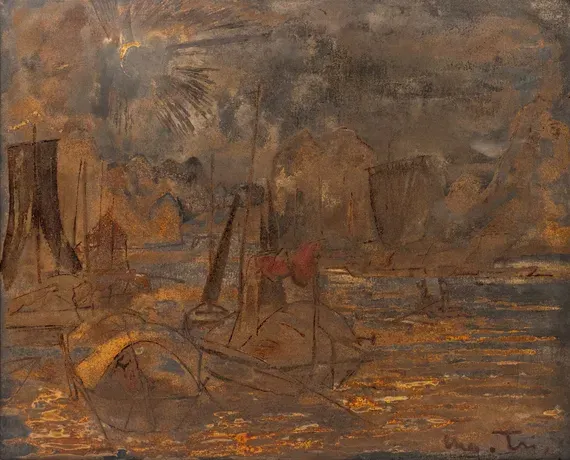
Nguyen Gia Tri
Bateaux dans la baie d'Halong (Fishing Boats in Ha Long Bay)
1960
Lacquer on panel
37 x 45 cm
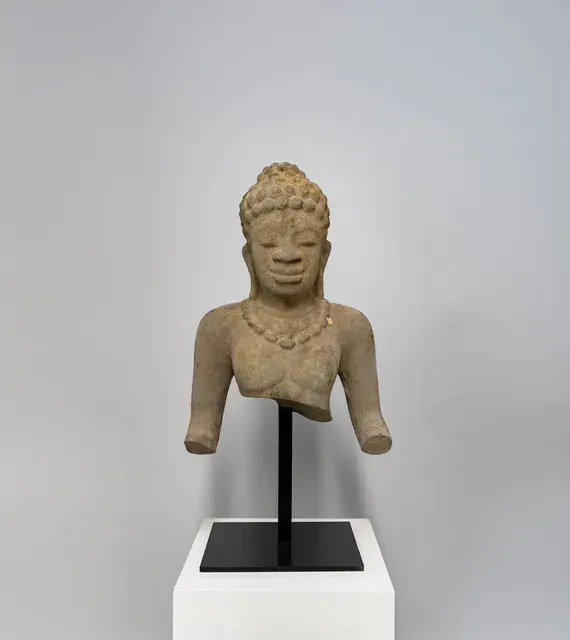
Unknown Artist
Buddha
9th-10th century
Sandstone
112 x 43 x 97 cm
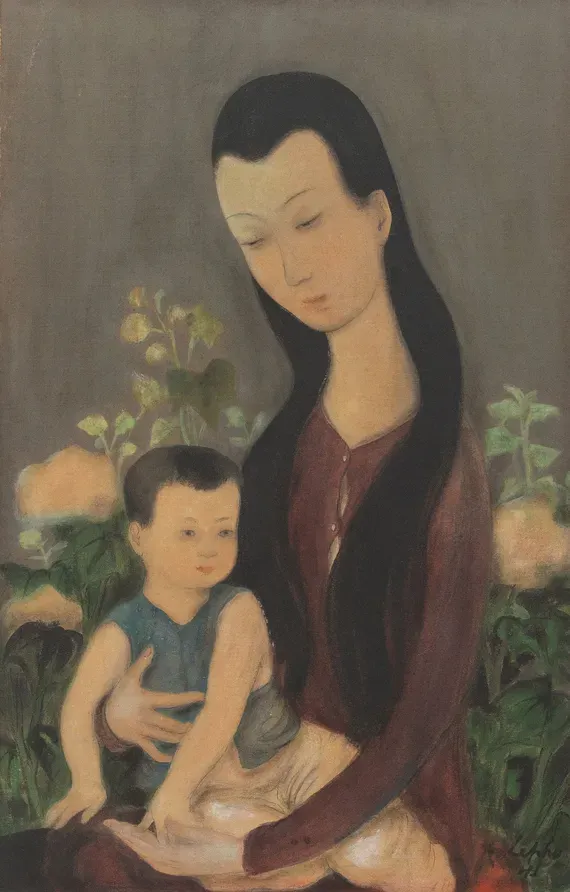
Lê Phổ
Femme et enfant (Woman and Child)
1941
Gouache and ink on silk
40 x 25 cm
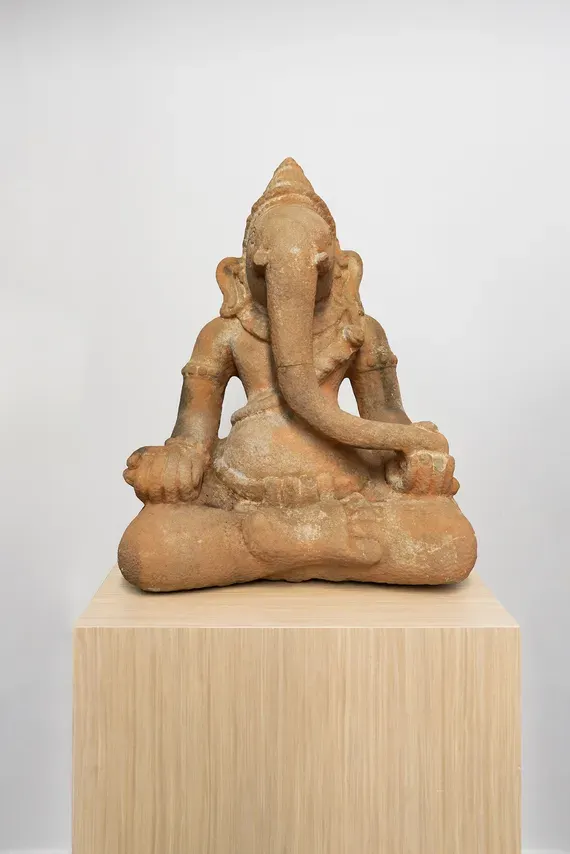
Unknown Artist
Ganesha
11th - 12th Century, Binh Dinh, Thap Mam style, Vietnam
Sandstone
51 x 36.5 x 31 cm
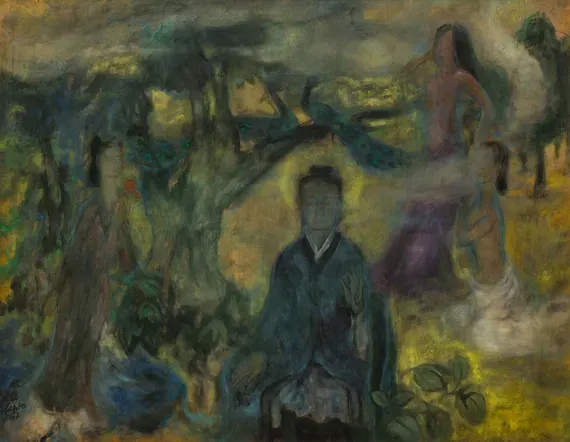
Lê Phổ
L’illumination de Bouddha (Buddha's Enlightenment)
1947
Mixed media on silk
86.4 x 114 cm
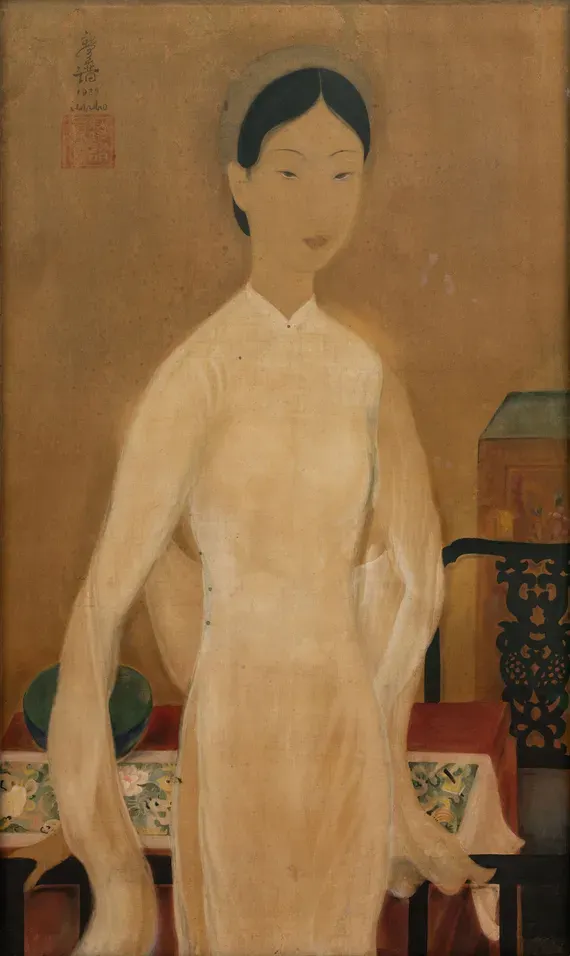
Lê Phổ
Le Bol Bleu (The Blue Bowl)
1930
Gouache and ink on silk
75 x 44.5 cmDimensions variable
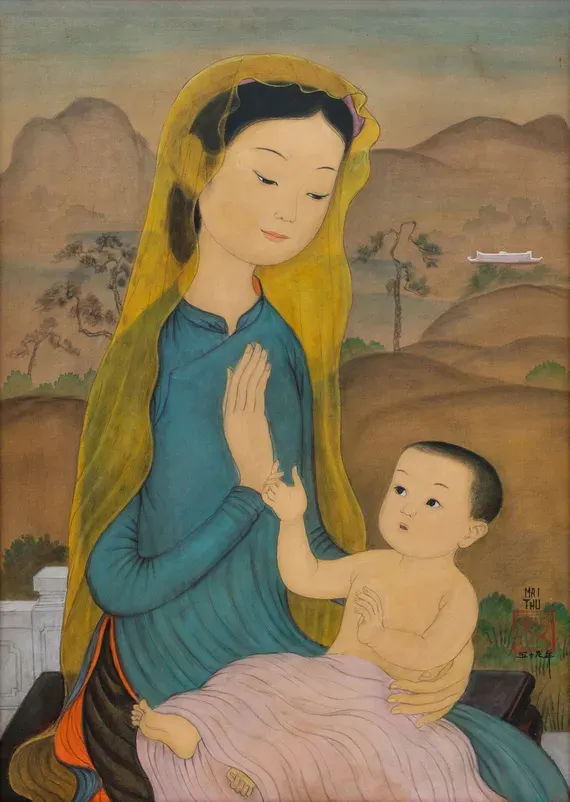
Mai Trung Thu
Mère et enfant (Mother and Child)
1959
Ink and gouache on silk
55 x 39.5 cm
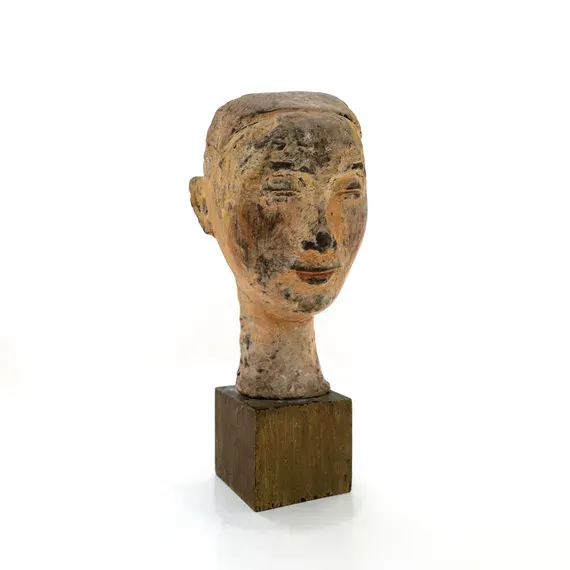
Cao Đàm Vũ
Tête de femme (Head of a Woman)
c. 1939
Terracotta sculpture with the artist's base
20 x 12 x 10 cm