Tuesday - Saturday 11 am - 6 pm The gallery is only open on Saturdays during an exhibition.
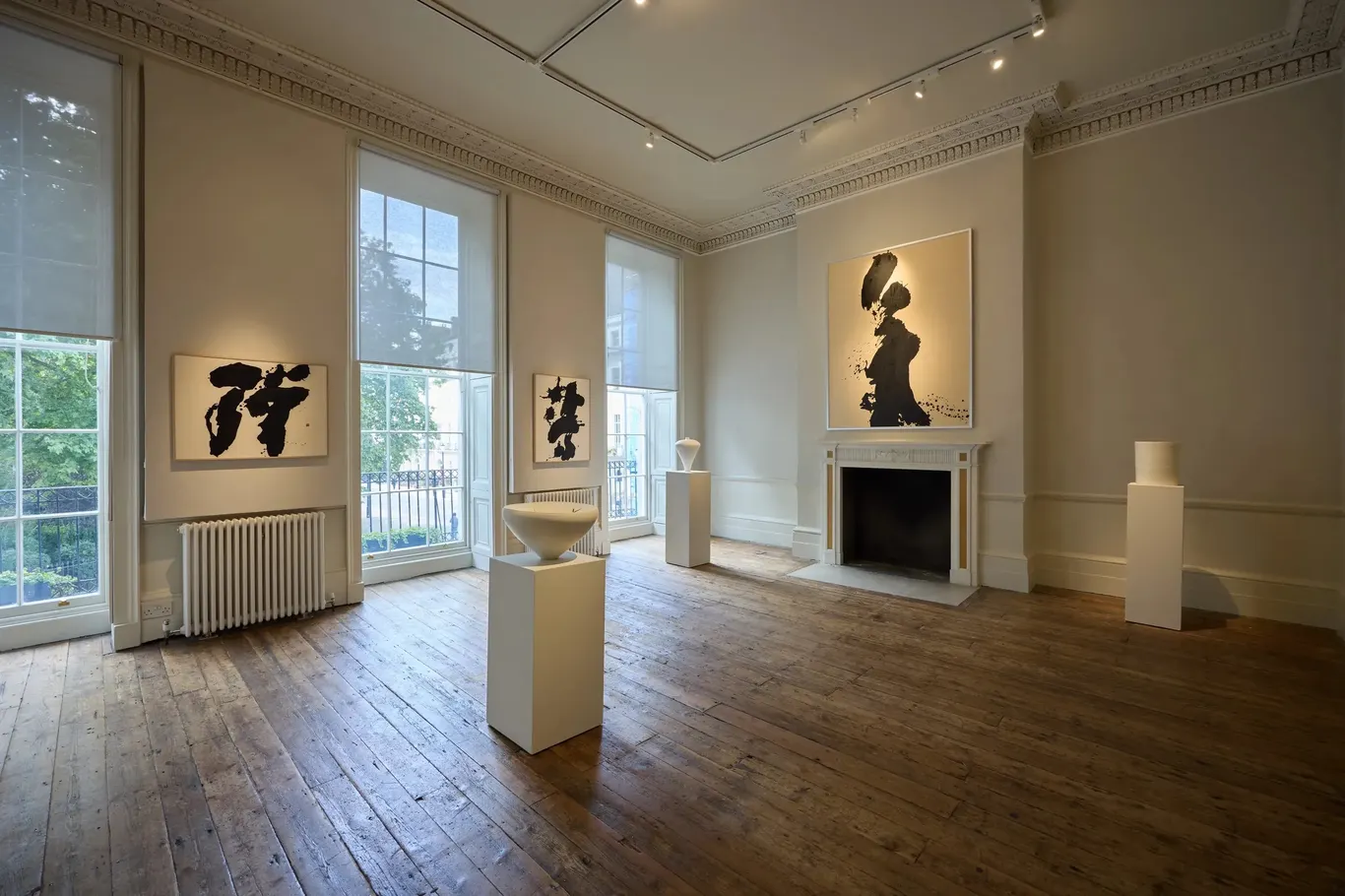
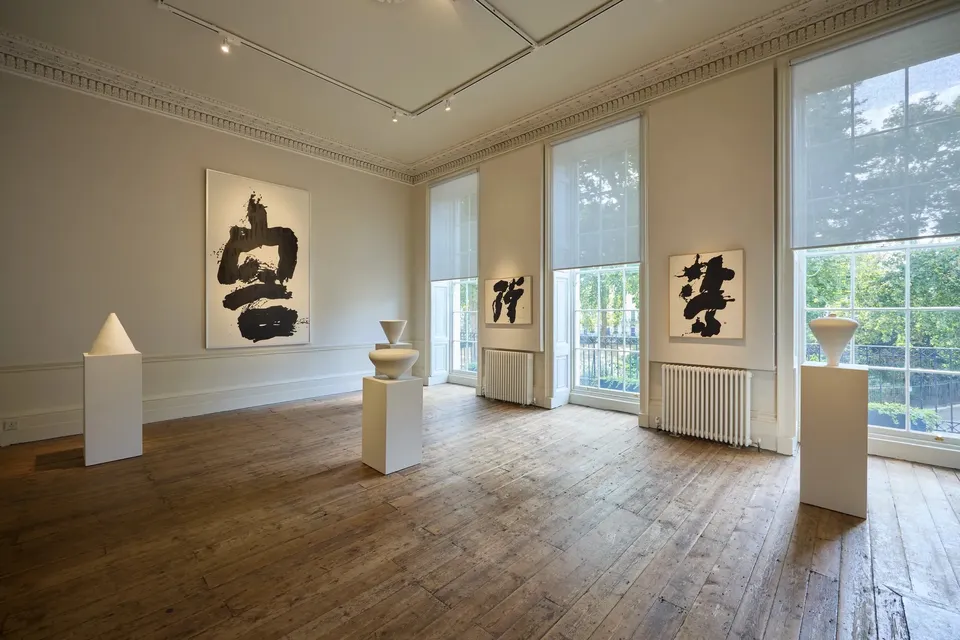
Tristan Hoare is delighted to present ‘Kensho’, an exhibition of works by Japanese ceramicist Taizo Kuroda and calligrapher Bokujin Sousai Inada. Through ink and earth, vessel and character, Kuroda and Inada engage in a deeply introspective exploration of how form can emerge through repetition, restraint, and self-reflection.
The title Kensho, a Zen Buddhist term meaning ‘seeing one’s true essence’, provides a conceptual foundation for the connection between Kuroda and Inada. It refers to the pursuit, shared by both artists, of accessing something beyond form and material through sustained repetition and refinement. As Bokujin Sousai Inada has stated, ‘the greatest theme for me is how to move the structure of a script to its utmost’.Born three years apart, Taizo Kuroda (b.1946 - d.2021) and Bokujin Sousai Inada (b.1949) belong to a generation of Japanese artists that emerged in the decades following the Second World War, when questions of cultural identity, modernity, and tradition occupied a central place in artistic discourse. Across disciplines, artists sought new modes of expression that could reconcile centuries-old artistic traditions with contemporary ideas and international movements. It is within this context that both Kuroda and Inada developed their practices, articulating highly individual responses to the languages of ceramics and calligraphy. Both inherited rich artistic lineages through their apprenticeships under influential masters - Kuroda under renowned ceramicist Tatsuzo Shimaoka and Inada under pioneering avant-garde calligrapher Shiryu Morita. Yet neither artist treats tradition as fixed conventions. Instead, they approach their respective mediums as dynamic frameworks through which new possibilities of form are explored and reinterpreted.The centre of both practices is an investigation into the nature of form itself. It is a process of self-discovery where form gradually emerges through a meditative dialogue between artist and material. As Kuroda explains, his forms are ‘inseparable from his own thinking’; each vessel becomes a reflection of emotions, sensations, and thoughts distilled into their purest state.’ Through repetition, he achieves a harmonious balance between mind and body, allowing him to compose and bring to reality shapes that the eye alone cannot imagine. In pursuit of increasingly abstract forms, Kuroda embraces what he describes as a ‘state of zero’ - a point of origin in which creation begins not with a positive image, but with formlessness itself. From this stage of absence, form gradually emerged through a process of intuition, repetition, and refinement.‘When you repeat the same gestures, do the same thing over and over again, you begin to feel something. Today I am looking for the form I can make over and over again without ever becoming tired [...] That is the Enso, trying, again and again, making the same gesture, and the same shape, seeking perfection but never attaining it.’ Taizo KurodaA similar pursuit defines Inada’s practice. At the core of Inada’s creative philosophy lies the question of how far the skeletal form of written characters can be pushed to the limit of movement. Rooted in rigorous study of classical calligraphy, each work begins with the inherited framework of a character, yet through breath, rhythm, and the movement of the entire body, this structure is transformed into a dynamic expression of energy. For Inada, calligraphy is not simply the writing of characters but the externalisation of vital energy, where each stroke becomes the physical trace of an invisible inner state. Guided by the Zen concept of ‘no-mind’ and internalised rhythm of breathing, the brush moves instinctively, allowing form to emerge through a balance of discipline and spontaneity.‘From complete self-reflection My brush begins to rise of its own accord My brush begins to move of its own accord This movement is the most difficult of all’Sousai InadaSousai Inada (b.1949)Bokujin Sousai Inada is a prominent contemporary Japanese avant-garde calligrapher. He is a direct disciple of Shiryu Morita, co-founder and leading figure of Bokujinkai, the influential avant-garde calligraphy group that played a pivotal role in redefining post-war Japanese calligraphy and introducing it to the international art world. As the current head of the group, Inada continues this legacy and is often referred to as Bokujin, or ‘Person of Ink’, a title that reflects his commitment to the artistic and philosophical ideals that have shaped the group since its foundation. The works of Bokujin Sousai Inada were kindly provided by Shibunkaku Gallery.Taizo Kuroda (1946-2021)Taizo Kuroda is one of the most important artists in Japanese contemporary ceramics. He began his training in Canada in the 1970s and returned to Japan in 1981, where he completed his apprenticeship under the master ceramicist Tatsuzo Shimaoka, who later became a Living National Treasure of Japan. In 1991, Kuroda built his home and studio in Futo, Izu Peninsula in Japan, where Tadao Ando designed a viewing room for him. Rather than exploring unusual forms or decorative designs in his work, Kuroda found himself captivated by the beauty of the pure white porcelain of the Joseon Dynasty in Korea, and around 1992, began making high-fired, unglazed ‘yakishime’ white porcelain. Pure white porcelain is notoriously difficult to produce by hand, and over many years Kuroda perfected his technique, developing and repeating shapes and exploring the limits of his material.Tristan Hoare Gallery held two exhibitions with Taizo Kuroda during his lifetime. The first was in London in 2016, and the second in Paris in 2018.
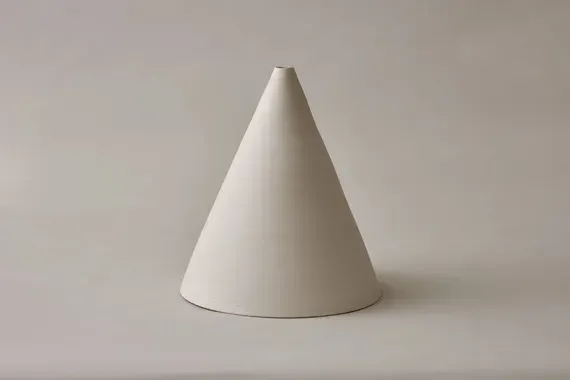
Taizo Kuroda
Untitled (Conoid)
2015
Yakishime Porcelain
32.7 x 35.6 cm
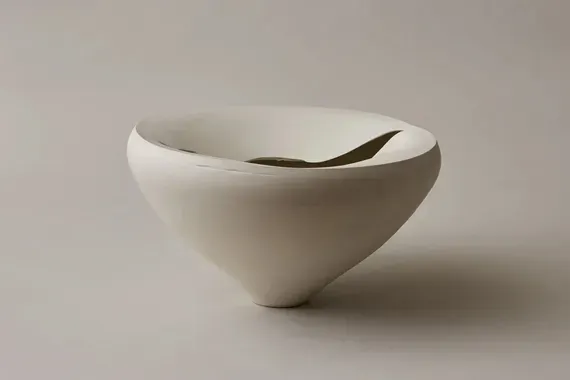
Taizo Kuroda
Untitled (Cracked Daizara)
2015
Yakishime Porcelain
24.5 x 46.4 cm
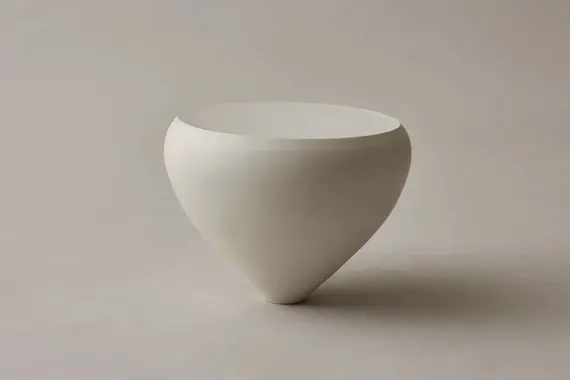
Taizo Kuroda
Untitled (Daizara)
2019
Yakishime Porcelain
12 x 26 x 26 cm
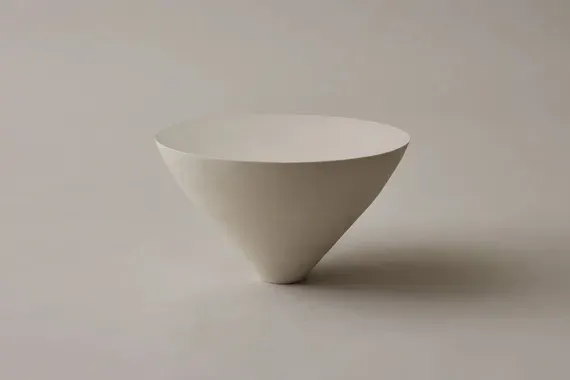
Taizo Kuroda
Untitled (Daizara)
2019
Yakishime Porcelain
15.5 x 26.5 x 26.5 cm
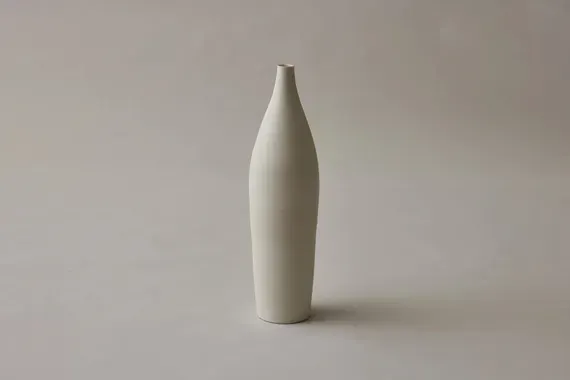
Taizo Kuroda
Untitled (Flower Vase)
2019
Yakishime Porcelain
35 x 10 x 10 cm
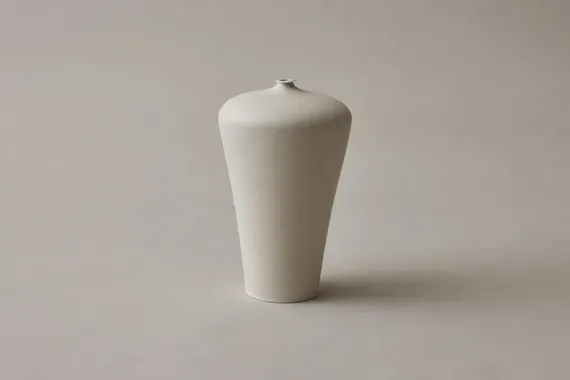
Taizo Kuroda
Untitled (Meiping)
2019
Yakishime Porcelain
23.5 x 11.5 x 11.5 cm
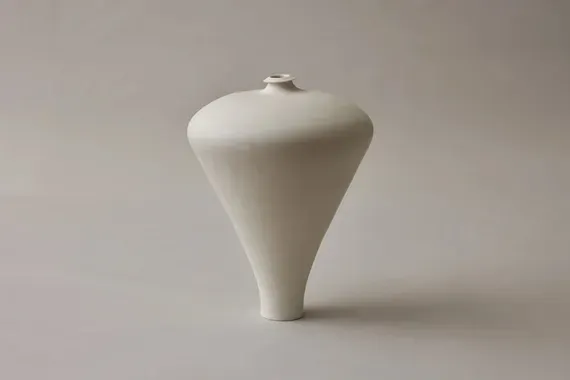
Taizo Kuroda
Untitled (Meiping)
2019
Yakishime Porcelain
35 x 26 x 26 cm
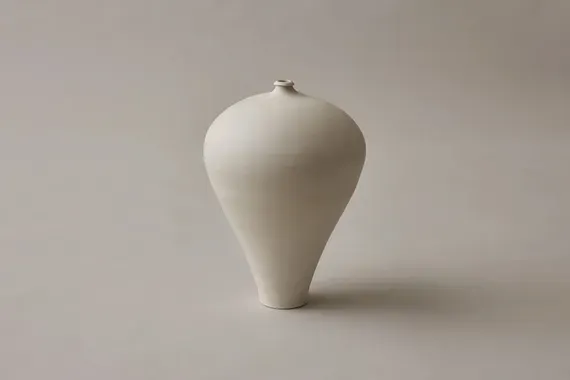
Taizo Kuroda
Untitled (Meiping)
2015
Yakishime Porcelain
26.7 x 19.1 cm
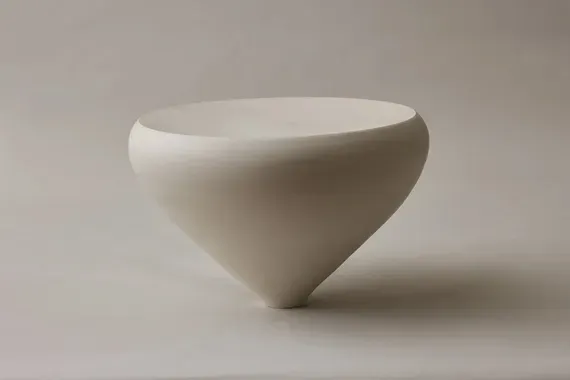
Taizo Kuroda
Untitled 42 (Daizara I)
2018
Yakishime Porcelain
28 x 43 cm
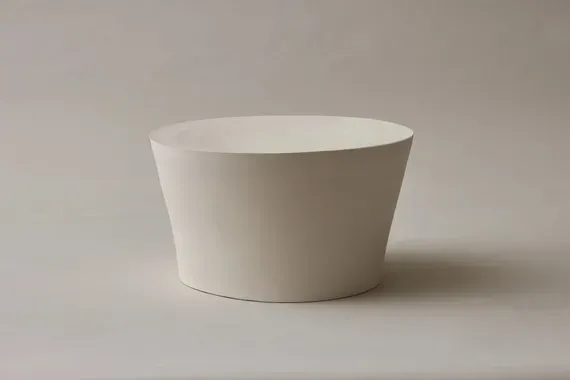
Taizo Kuroda
Untitled 47 (Daizara VI)
2018
Yakishime Porcelain
20.1 x 35.3 cm
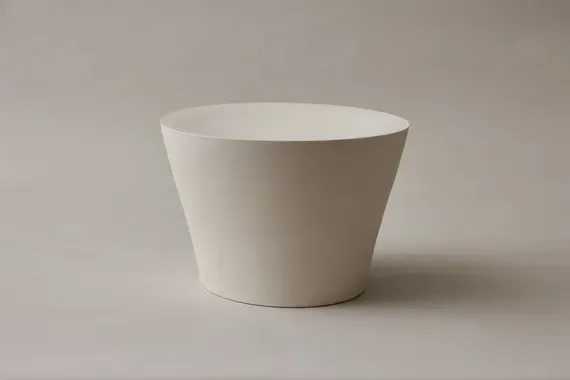
Taizo Kuroda
Untitled 48 (Daizara VII)
2018
Yakishime Porcelain
24.4 x 36.1 cm
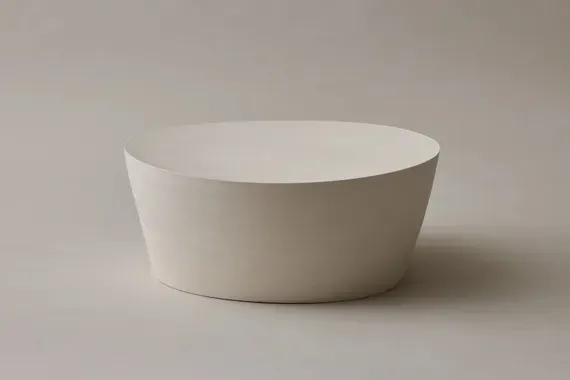
Taizo Kuroda
Untitled 49 (Daizara VIII)
2018
Yakishime Porcelain
16.8 x 40 cm
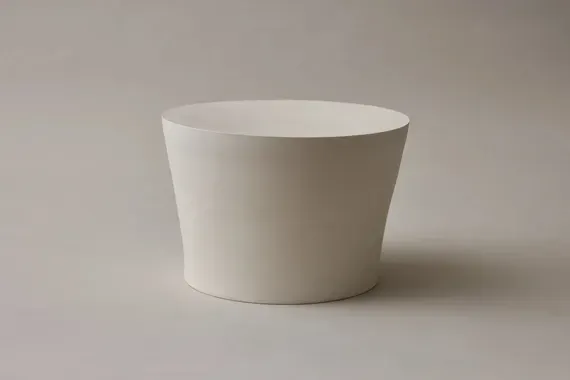
Taizo Kuroda
Untitled 50 (Daizara IX)
2018
Yakishime Porcelain
22.7 x 33.4 cm
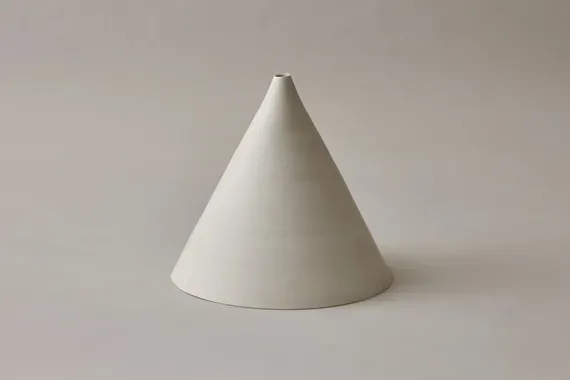
Taizo Kuroda
Untitled 66 (Conoid)
2018
Yakishime Porcelain
26 x 28.1 cm
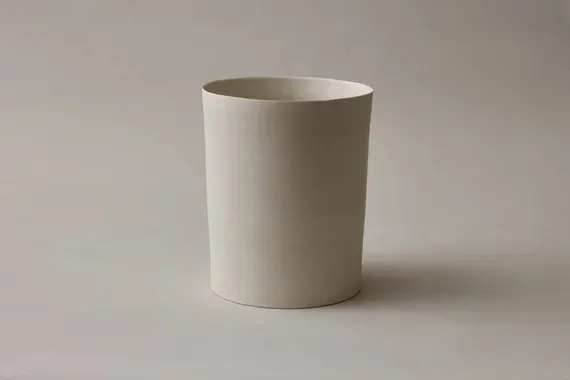
Taizo Kuroda
Untitled 84 (Cylindrical Bowl)
2018
Yakishime Porcelain
31.3 x 25.7 cm
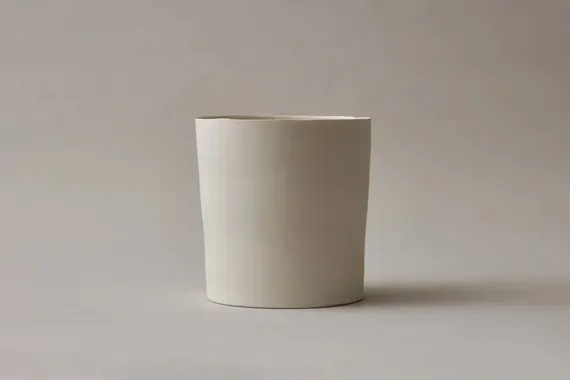
Taizo Kuroda
Untitled 86 (Cylindrical Bowl)
2018
Yakishime Porcelain
20.8 x 19.7 cm
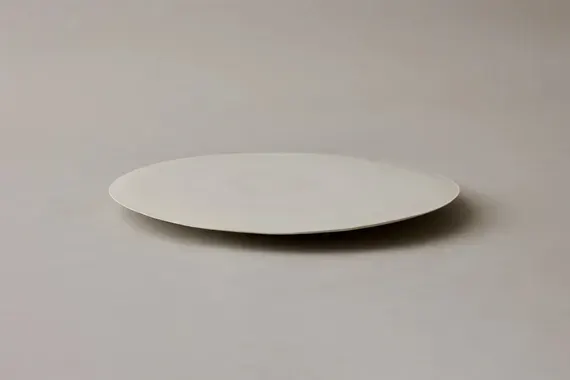
Taizo Kuroda
Untitled 90 (Flat Daizara)
2018
Yakishime Porcelain
3.5 x 52.4 cm
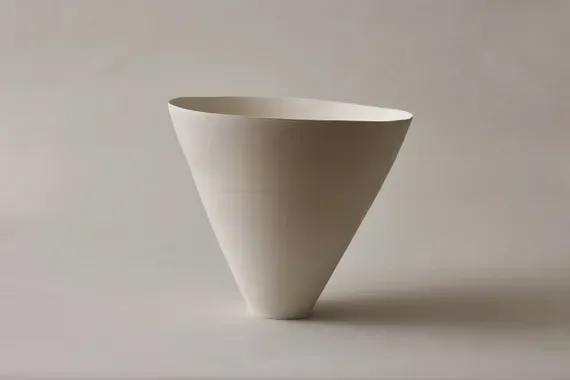
Taizo Kuroda
Untitled 92 (Large Bowl)
2018
Yakishime Porcelain
36.5 x 43 cm
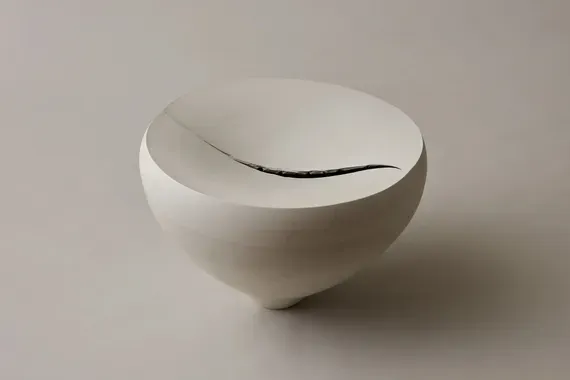
Taizo Kuroda
Untitled 93 (Cracked Daizara XIII)
2018
Yakishime Porcelain
29 x 44.8 cm
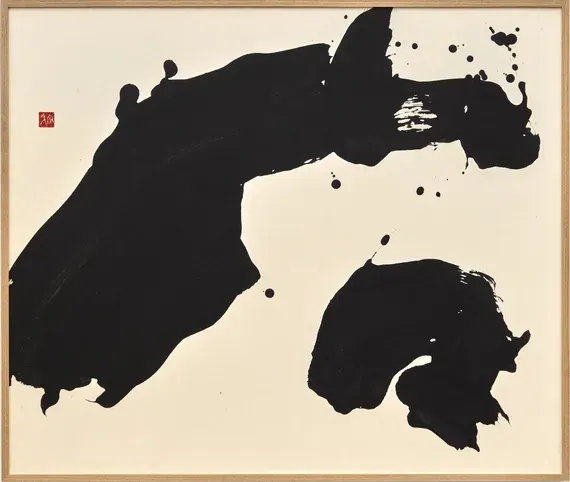
Sousai Inada
始 Hajime (Origin; where all things begin)
2018
Ink on paper
61.5 x 72.5 x 4 cm (incl frame)
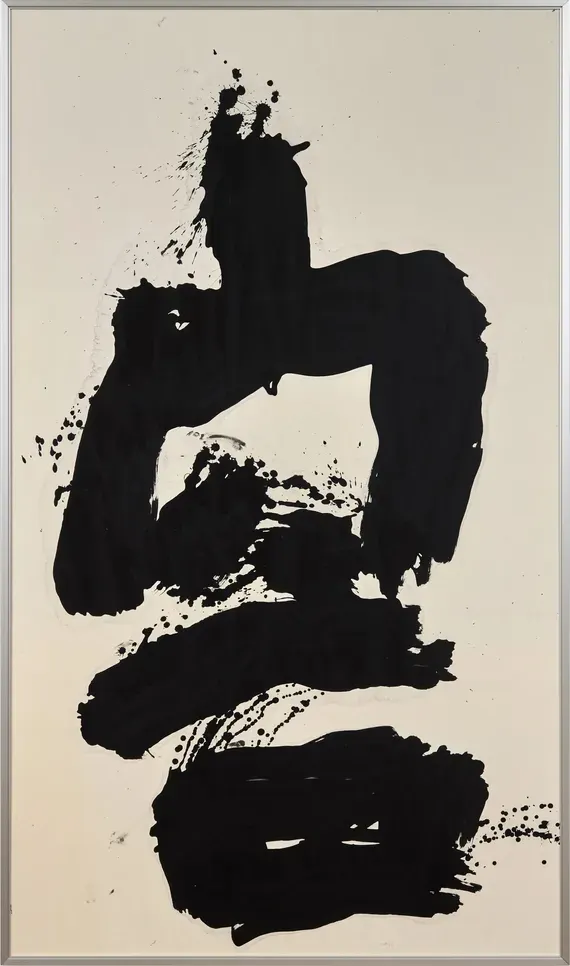
Sousai Inada
容 Yō (Embrace; greatness through acceptance)
2018
Ink on paper
243.5 x 143 x 4.5 cm (incl frame)
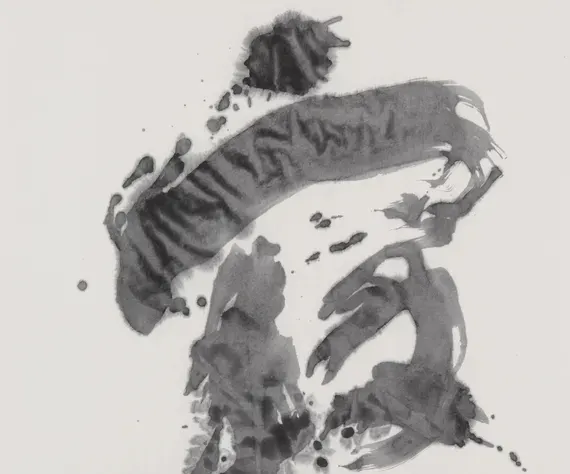
Sousai Inada
寂 Jaku (Tranquility: peace beyond desire)
2026
Ink on paper, hanging scroll
69.5 x 82 cm
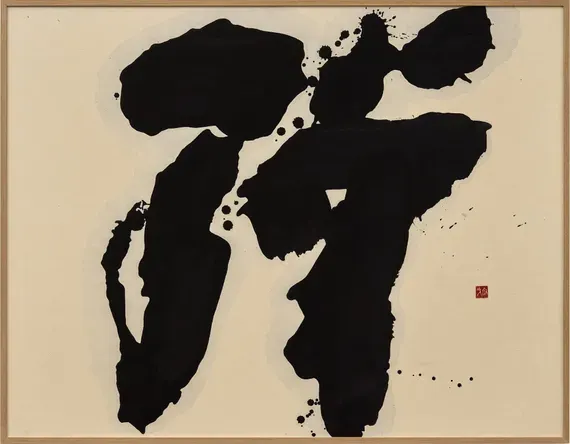
Sousai Inada
弾 Dan (Cadence: rythmic vitality)
2022
Ink on paper
71 x 91 x 3 cm (incl frame)
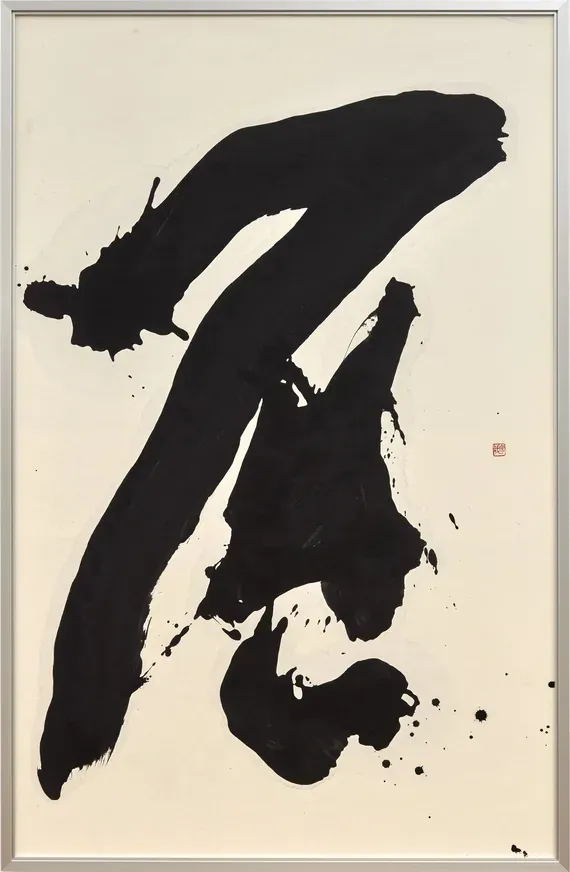
Sousai Inada
歴 Reki (Chronicle; all things as they are)
2016
Ink on paper
142.5 x 93.5 x 4 cm (incl frame)