Richard Peduzzi
October 6, 2026 to January 17, 2027
Musée d'Orsay, Esplanade Valéry Giscard d'Estaing, ParisTuesday – Sunday 9.30am – 6pm Closed Monday
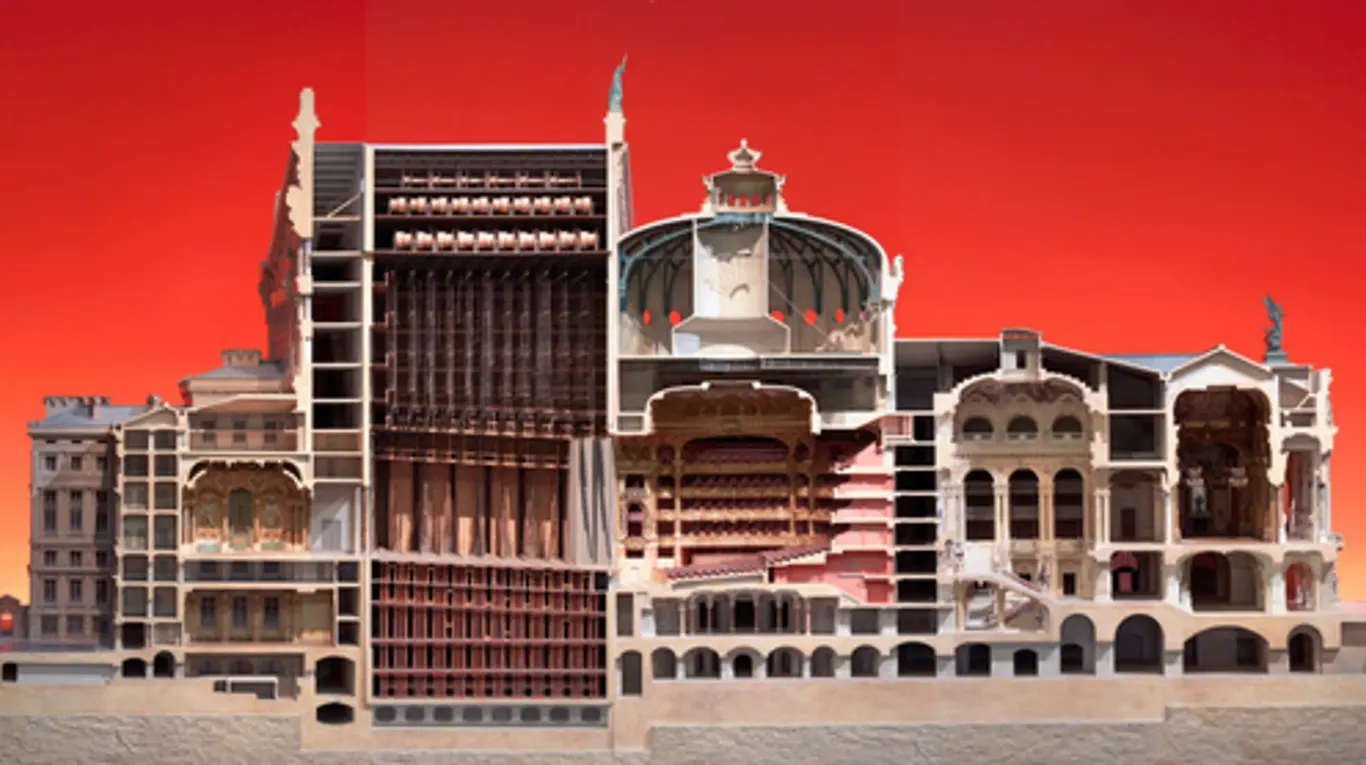
A major theater and opera set designer and Patrice Chéreau’s longtime collaborator, Richard Peduzzi has spent his life revamping the art of scenography. At the Musée d’Orsay, his monumental models of the Opéra Garnier and its neighborhood have accompanied visitors ever since the museum opened in 1986.
In 1986, Richard Peduzzi, well-known for his avant-garde creations for theater and opera, scenographed the Musée d’Orsay’s interior, giving major prominence to 19th-century architecture. Among other things, he designed a display at the end of the Museum’s great nave that highlighted the Opéra Garnier and its neighborhood, which had been radically reshaped by Prefect Haussmann’s renovations. Still today, the models of Charles Garnier’s building and the Opéra neighborhood, which we look down upon from above in a vertiginous spatial setting, are one of the visit’s highlights and are much appreciated by the public. They are among Orsay’s most emblematic exhibits.Forty years later, the institution has looked back on this highly original choice and invited the artist to resume a dialogue between the Museum, its collections and his creations. The exhibition sheds new light on the scenographers’ world, haunted by imaginary architectures. Conveying meaning and emotion alike, they were full-fledged actors in the scenic revolution brought about by their designs in the 1970s and 1980s. His earliest creations with Patrice Chéreau (Richard II and The Massacre at Paris) contain architectural motifs that would continue to feature in all his work: never-ending walls, towers, ruins and derelict sites return like obsessions, nourishing the meaning of the play’s staging.Deployed around the monumental models he created for the Museum, a wide selection of the artist’s works (paintings, drawings, stage set models and sculptures) rekindle the expressive power of the artist’s achievements. Some of them, including the set models for Chéreau’s staging of Alban Berg’s Lulu at the National Opera House in Paris (1979), are contemporary with the thought Richard Peduzzi gave to the Musée d’Orsay’s scenography. Above all, they provide evidence of the creative processes behind shows that have entered into legend, whether plays such as Christopher Marlowe’s The Massacre at Paris (National People’s Theater in Villeurbanne, 1972), Marivaux’s La Dispute (National People’s Theater in Villeurbanne, 1973), or such operas as Alban Berg’s Lulu and Wolfgang Amadeus Mozart’s Lucio Silla (theaters in Milan, Nanterre and Brussels, 1984).There are evident correspondences with the Museum’s drawings, chosen with Richard Peduzzi as so many resonances with his own creations. Works by Eugène Viollet-le-Duc (The Temple of Neptune in Paestum), Hippolyte Le Bas (Prison de la Petite Roquette) and Gustave Eiffel (Study of Cube and Study of Cylinder) bear witness to his eclectic sources of inspiration, from Antiquity to the present day. Nourished by these references, his imagination surpasses simple historical citation to create meaningful spaces and a unique aesthetic. Impressive and vertiginous, Richard Peduzzi’s scenographies are more than just stage sets, but provide the staging with a literal setting. They are essential components of performances designed as total works.