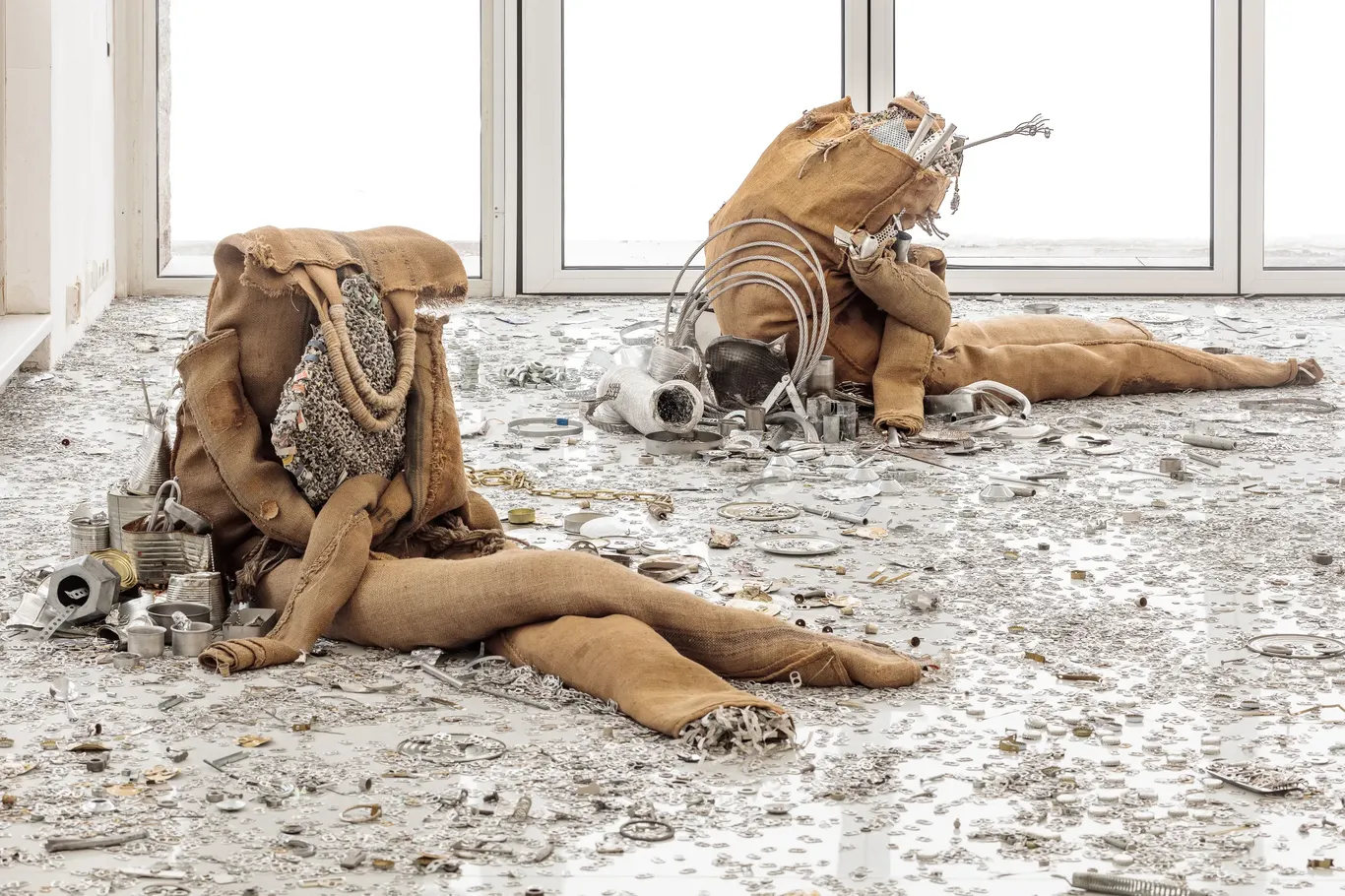
P21 and Croy Nielsen are pleased to present Birke Gorm’s first solo exhibition in Korea, on view from September 1 to October 10, 2026. The exhibition offers an opportunity to encounter Gorm’s work in Seoul ahead of the Gwangju Biennale, where she will be presenting the evening and the morning and the night in the Austrian Pavilion at the 16th Gwangju Biennale.
We are also pleased to announce the launch of tales from the attic, the publication accompanying the Austrian Pavillion, and a conversation between the artist and Pavilion curator Attilia Fattori Franchini.The launch is co-hosted by Phileas.In her series of jute works titled Huswifs (2021–), Birke Gorm focuses on the traditional character of the bag and addresses constructed gender differences in relation to the historical development of men’s and women’s clothing. She draws attention to how the manufacture, production and circulation of everyday objects in modern Western societies have contributed to the construction of gendered hierarchies of privilege and restriction. The Huswifs are based on and named after the term huswif (Middle English for “housewife”), which also came to denote a small, portable sewing case contain- ing useful utensils such as needles, scissors and thread. These cases could incorporate several small compartments or pockets and were often rolled or folded and secured with a ribbon or tie. These were kept in so-called “tie-on” pockets, a detachable pocket which became popular in the 17th century, of- fering women a practical and portable means of carrying personal belongings. They could carry a wide range of possessions in pockets tied around the waist, including sewing implements, money and other everyday objects. In contrast to the sewn-in pockets that became characteristic of men’s clothing, women frequently relied on separate pockets worn underneath or alongside their garments. Pockets thus constitute a suitable metaphor for privilege: often unnoticed by those who possess them, access to functional storage can shape freedom of movement, privacy and the possibilities for participation in everyday social life. In this context, Gorm’s work can be read alongside Silvia Federici’s analysis of the relationship between private property, patriarchy, the family and the development of capitalism.Federici argues that the consolidation of private property and changing systems of inheritance were closely connected to the reorganisation of gender relations and the sexual division of labour, contributing in many contexts to women’s increasing economic dependence. Rather than representing a single causal development, these processes can be understood as mutually reinforcing transformations in which women’s access to property, income and economic autonomy has been progressively restricted in many contexts.
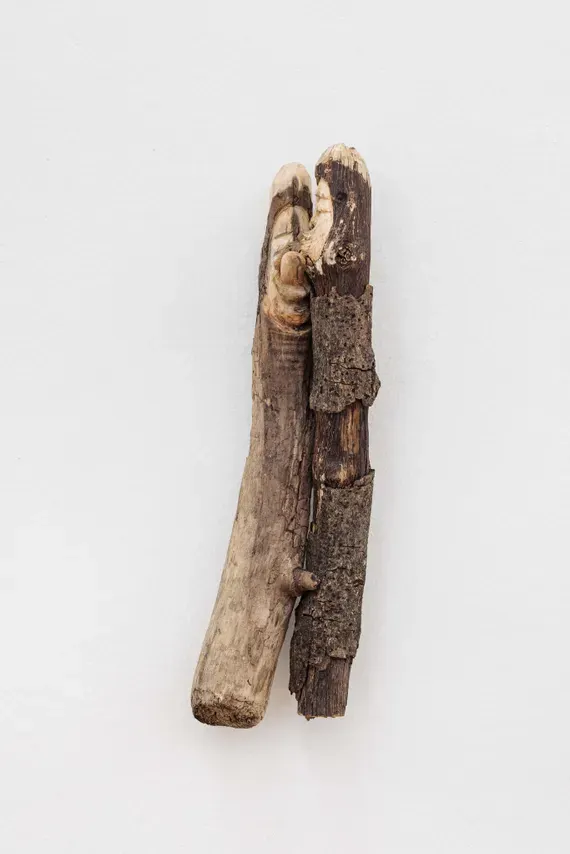
Birke Gorm
IOU
2021
Wood
31 x 10 x 7 cm
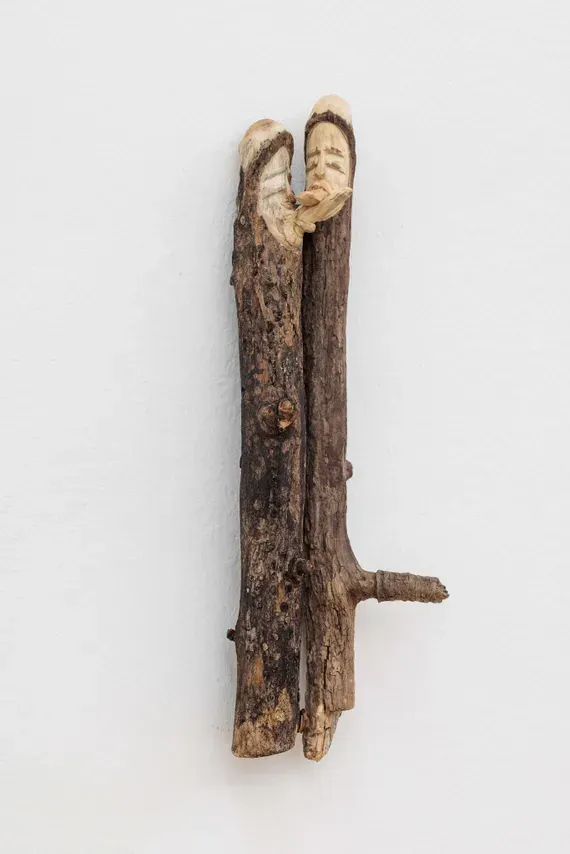
Birke Gorm
IOU
2021
Wood
33 x 11 x 8 cm
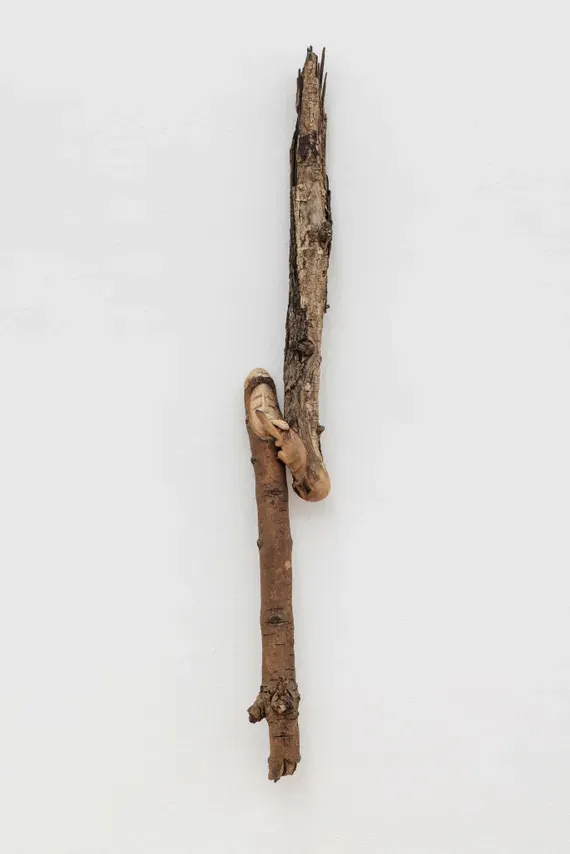
Birke Gorm
IOU
2021
Wood
65 x 10 x 8 cm