Tuesday - Sunday (By appointment only) 11am - 7pm
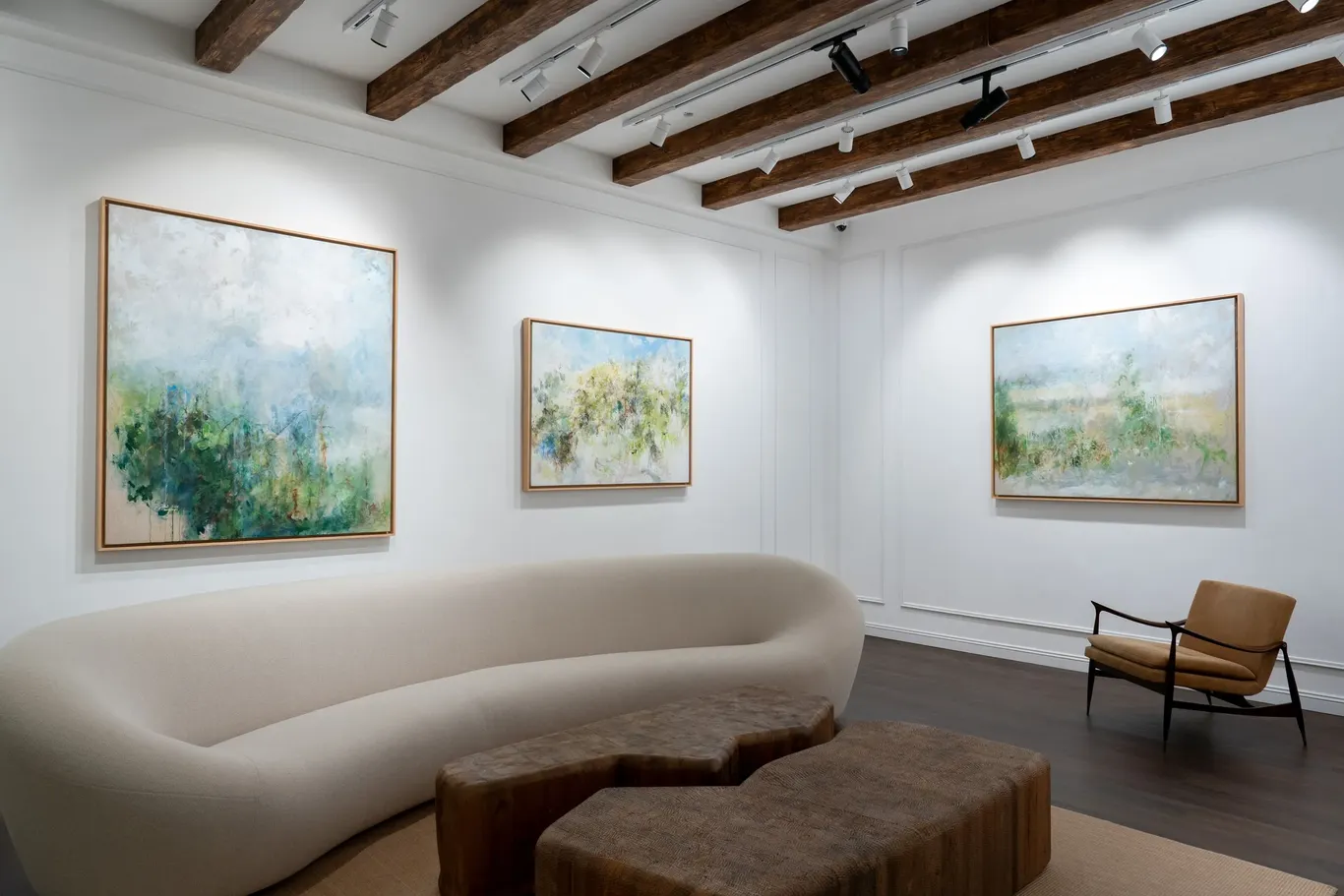
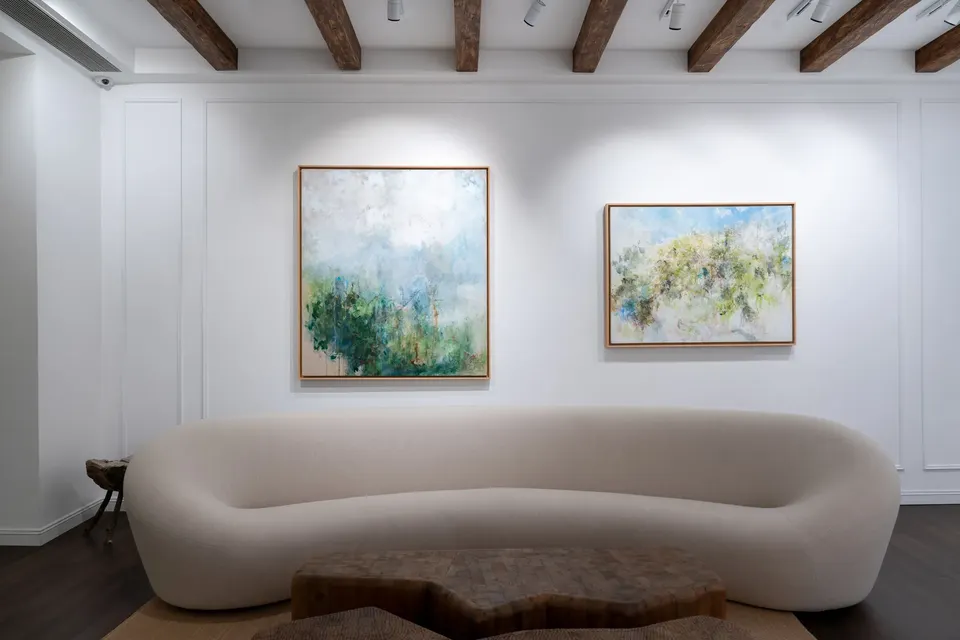
VILLEPIN is delighted to present What Remains to Be Seen, a solo exhibition by Myonghi Kang, opening this September in Hong Kong. Marking the artist’s first solo exhibition at a gallery in over two years, following The Rebirth of Nature: Chapters 1 & 2 (2024), the exhibition brings together a significant group of recent paintings and works on paper.
Presented following major institutional exhibitions at the Seoul Museum of Art in 2025 and Château La Coste in 2024, What Remains to Be Seen reflects more than six decades of sustained observation and experimentation. Rather than looking back on a completed career, the exhibition presents an artist who continues to return to what she has not yet fully understood.For Myonghi Kang, painting is not a means of describing the world, but a way of learning how to see it. For decades, she has returned to the same landscapes, flowers and motifs, sometimes leaving a painting untouched for months or even years before returning to it. Looking, for Kang, is not what happens before painting begins. It is part of the work itself.Often, what compels her most is precisely what continues to resist her. In Andeok Valley in Jeju, a landscape she has painted and drawn repeatedly through different seasons, Kang returns to the same rocks because she still struggles to capture the particular presence of moss growing across their wet surfaces.“The landscape is a pretext,” she has said. What interests her, ultimately, is the human eye.Time therefore becomes part of the making of a painting. Kang may sign a work and return to it months later. For her, a signature does not necessarily mean that a painting is finished, but rather: “Up to this point, I have understood.” She allows paintings to change as she herself changes, accepting uncertainty and error as part of their development.“Without mistakes, a painting cannot mature.”During conversations in preparation for the exhibition, Kang described her working rhythm through a simple image. Water boils at one hundred degrees. She tries to stop at ninety-nine.Rather than exhausting a work, she preserves the energy and desire to return to it the following day. “I know how to cultivate my desire,” she says. After more than sixty years of painting, that desire remains at the centre of her practice.The works in What Remains to Be Seen embody this continuing search. In La Source, inspired by Andeok Valley, landscape becomes an exploration of distance, light and perception. Works including Nature morte aux trèfles pourpres, Hibiscus, and Pivoine carry within them extended periods of looking, waiting and return.In Le Jardin de la dame aveugle, the question of seeing takes an unexpected turn. From her window, Kang watched an elderly woman tending a small garden, cutting plants and throwing weeds into the air.Only later did she learn that the woman was blind. The encounter stayed with her and eventually entered the painting.After a lifetime devoted to looking, Kang found herself painting the garden of someone who could not see.The exhibition also includes a recent series of works on paper created at the Villa Medici in Rome, where Kang would rise at around five or five-thirty in the morning to observe the first light from her room. Moving between pastel and ink, she continued the same practice that has accompanied her for decades: returning to a place until something new becomes visible.After more than sixty years of painting, Myonghi Kang is still learning to see.What Remains to Be Seen is not an exhibition about arrival or completion. It captures a moment within a practice that remains open: to another season, another memory, another mistake, another look.There is always something that remains to be seen.The exhibition is accompanied by a new essay by Arthur de Villepin, curator of What Remains to Be Seen.
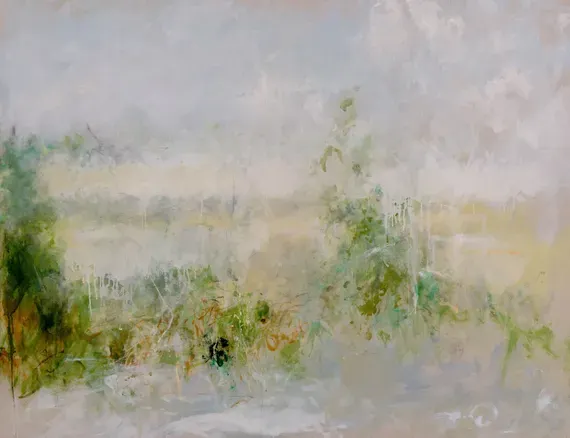
Myonghi Kang
Jardin de la dame aveugle
2025
Oil on canvas
112 x 145 cm
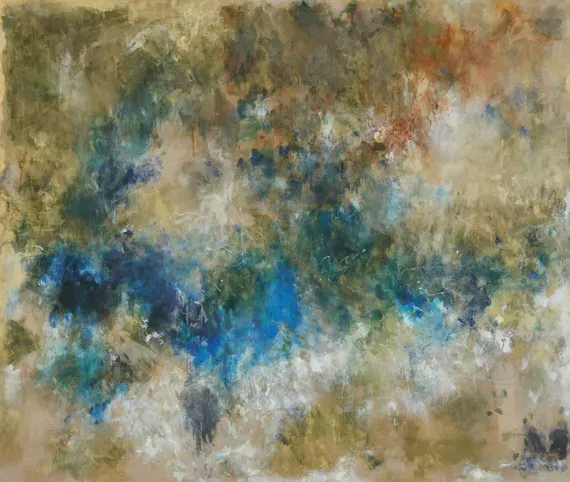
Myonghi Kang
La source
2026
Oil on canvas
288 x 340 cm