New York • b. 1932
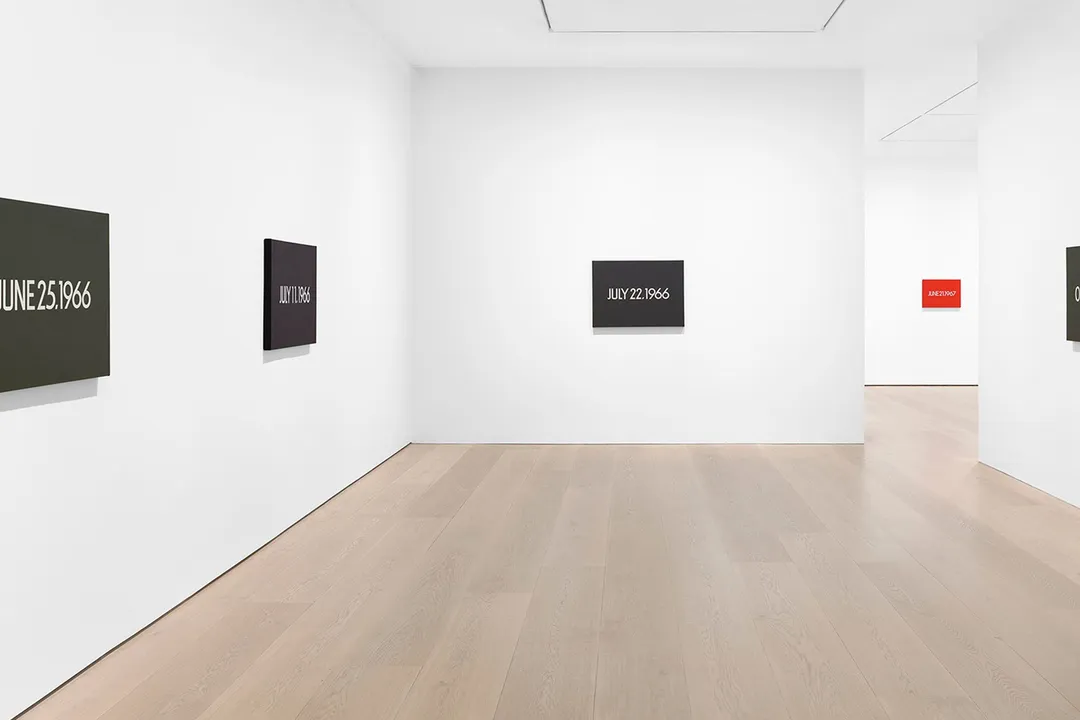
Over more than five decades, On Kawara (29,771 days) developed a distinct and highly nuanced form of artistic expression that engaged with chronological time and its function as a measure of human existence. A key figure in the conceptual art movement that emerged in New York in the 1960s, the artist created a significant body of work organized into discrete series that together form a meditative examination of time and place. At once specific and universal, rigorous and expansive, Kawara’s work encompasses the simultaneous mundanity and vastness of lived experience, and allows for a multiplicity of meanings. Born in Kariya, Japan, Kawara moved to Tokyo in 1951 immediately after graduating from high school, where he established himself as a key member of the rising postwar avant-garde. Kawara left Japan in 1959, moving to Mexico City for several years, during which time he studied modern art and traveled around the country—a period that proved formative in the development of his later work. Between 1962 and 1964, he lived between New York and Paris, before settling permanently in New York, though he would continue to travel extensively for the rest of his career, making work in countries around the world. Kawara’s work has been represented by David Zwirner since 1999. Solo exhibitions at the gallery include I READ 1966–1995 (1999), Reading One Million Years (Past and Future) (2001), Paintings of 40 Years (2004), and One Million Years (2009). In 2012, On Kawara: Date Painting(s) in New York and 136 Other Cities , which presented more than 150 Date Paintings selected by the artist, marked his fifth solo exhibition at the gallery in New York and was accompanied by an eponymous, fully illustrated catalogue published by Ludion. In 2024-2025, two concurrent exhibitions of Kawara's work, Date Paintings and Early Works , were held at David Zwirner London and Paris, respectively.