Paris • b. 1978
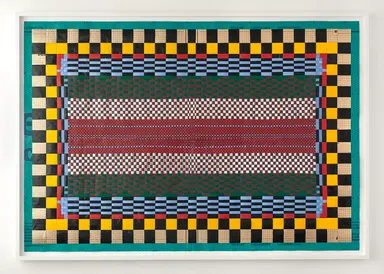
Kapwani Kiwanga (b. 1978, Hamilton, Canada) traces the pervasive impact of power asymmetries by placing historic narratives in dialogue with contemporary realities, the archive, and tomorrow’s possibilities. Her work is research-driven, instigated by marginalised or forgotten histories, and articulated across a range of materials and mediums including sculpture, installation, photography, video, and performance. Kiwanga co-opts the canon; she turns systems of power back on themselves, in art and in parsing broader histories. In this manner Kiwanga has developed an aesthetic vocabulary that she described as “exit strategies,” works that invite one to see things from multiple perspectives so as to look differently at existing structures and find ways to navigate the future differently. In 2026, Kiwanga presented Changing States, her first major retrospective in Spain, at the Fundació Joan Miró following her receipt of the 2025 Joan Miró Prize. In 2024, Kiwanga’s acclaimed solo presentation titled 'Trinket', for the Canadian Pavilion, at the 60th Venice Biennale, commissioned by the National Gallery of Canada, debuted a site-responsive sculptural installation made of conterie, also known as seed beads. The installation examined Global trade and transactional relations between Africa and Europe and continues the artist’s concerns with how diverse forms of power are manifested. In 2023, Kunstmuseum Wolfsburg presented Kiwanga’s first comprehensive mid-career retrospective, 'The Length of the Horizon'. This show includes her memorable Venice Biennale installation Terrarium (2022). In 2020, Kiwanga received the Prix Marcel Duchamp (FR). She was also the winner of the Frieze Artist Award (USA) and the annual Sobey Art Award (CA) in 2018.