Amsterdam and Bourbonnais, France • b. 1939
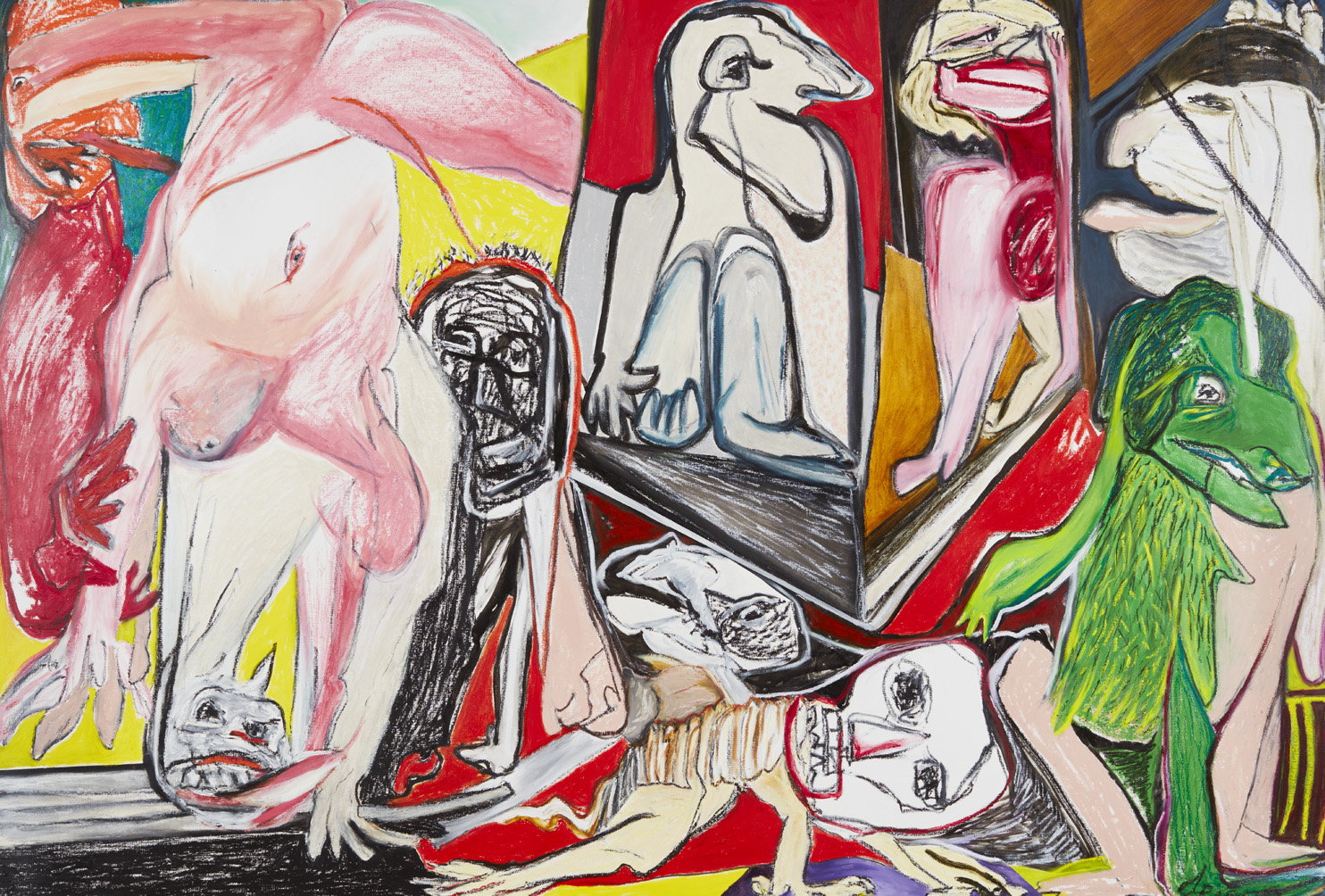
Jacqueline de Jong’s eclectic paintings share an unwavering commitment to revolutionary aesthetics and politics. Her experiments with figuration and narrative mythologies condense geographical and historical timelines, giving rise to archetypal depictions of human suffering and strife. Drawing upon the artist’s biography as a World War II émigrée, her work evokes the profound trauma of dispossession and political powerlessness while eluding any fixed interpretation. Best known as one of the few woman members of the Situationist International, Jong’s dedication to painting resulted in her eventual expulsion from the increasingly theoretical group. During this time, the artist also became deeply involved in local activism, founding the influential journal, The Situationist International (1958–1969) and fashioning disruptive interventions in public spaces. Jong’s persistent and prolific production is defined by fractured compositions and a preoccupation with cruelty, banality, humor, eroticism and even the joie de vivre of the human condition, making for an unquestionably grotesque and affective body of work.