London
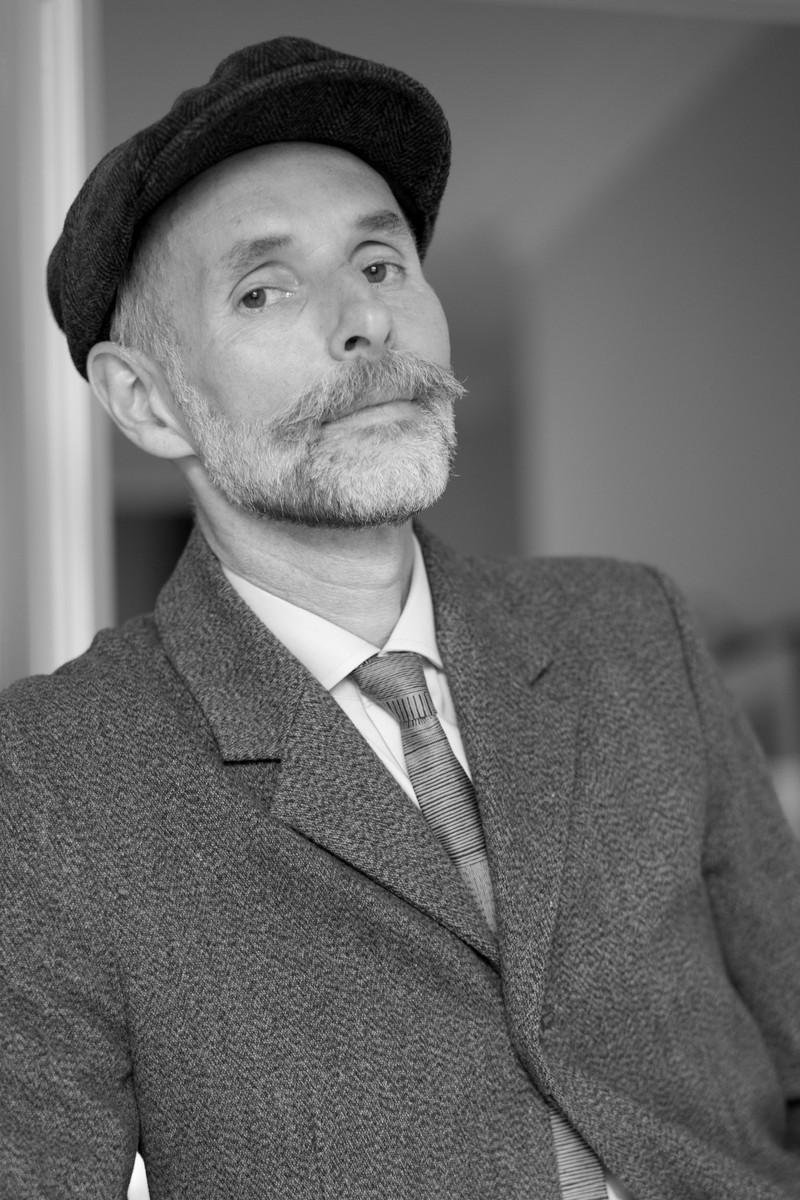
I like my paintings to have one foot in the grave, to be not quite of this world. For me they exist in a dream world, a world that is made up of all the accumulated images stored in our subconscious that coagulate and mutate when we sleep. —Glenn Brown Mining art history and popular culture, Glenn Brown has created an artistic language that eschews categorization, fusing a wide range of time periods and pictorial conventions through reference, appropriation, and precise attention to detail. His mannerist impulses stem from a desire to breathe new life into history, using its forms as vehicles for his exploration of paint. As an art student at Goldsmiths College, London, in the 1980s, Brown wrestled with the idea that painting had reached its end, as artists, critics, and scholars were then proclaiming. Seeking a future for painting despite its historical baggage, he made illusionistic versions of the thickly painted works of Frank Auerbach and Karel Appel, rendering their layered impasto in smoothly detailed two-dimensional brushstrokes. Brown sources images from the Internet, books, and other printed materials, distorting and manipulating them. In the 1990s he created several paintings based on science fiction novels drawing inspiration from sci-fi illustrations of the 1970s and 1980s, as well as the apocalyptic scenes created by painter and illustrator John Martin. In these works Brown combined panoramic and close-up views, a technique he would later apply to depictions of the body and flesh, alluding to works by Salvador Dalí, Willem de Kooning, Chaim Soutine, and others. As a complement to his painting practice, he creates sculptures by accumulating thick layers of oil paint over structures or found bronze casts. Brown has also produced detailed drawings in which he further explores the uncanny juxtapositions seen in his paintings. Since 2013 he has increased his engagement with drawing’s tactility, using different types of lines, shadings, and strokes in order to reinterpret the age-old tradition of copying historical subjects as a learning tool. His drawings reinforce the importance of gesture, echoing the layered lines of Old Master sketches. Many of Brown’s titles make reference to literature, film, or individuals. Though not overtly related to the content of the paintings, drawings, and sculptures they name, the titles assert a directness that parallels Brown’s subject matter. In this way, he combines textual and visual reference as a means to update art history and perception. Exhibitions such as the British Museum’s Historical Baggage: Glenn Brown and His Sources (2018) have made the links between Brown’s works and those from which he draws inspiration even more apparent. The show paired early portraits based on prints by Rembrandt van Rijn and Lucian Freud with Brown’s 2012 series Half-Life , a new engagement with Rembrandt’s work, revealing Brown’s intricate technical evolution over the past decade. In 2022, Brown established the Brown Collection in London, an art museum showcasing his artwork alongside his choice of works by contemporary and historical artists.