b. 1928
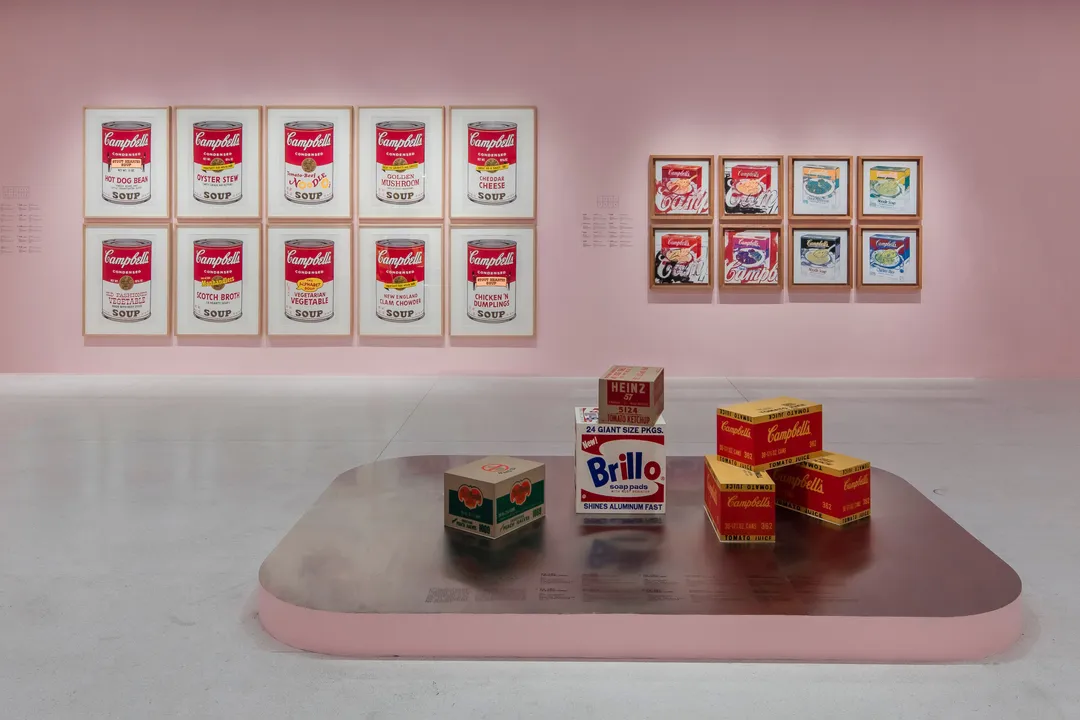
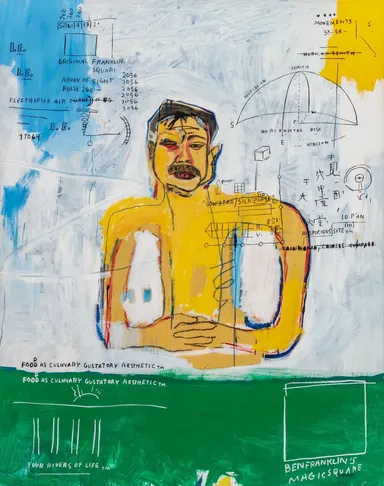
A pioneer and central figure of Pop art, Andy Warhol used everyday commodities and celebrity portraits from mass media as his subject matter, creating enduring images that have come to define his era. Drawing on his background as a commercial illustrator, he depicted best-selling products such as Campbell’s Soup cans, Coca Cola bottles and Brillo boxes, as well as instantly recognisable figures including Marilyn Monroe, Jackie Kennedy and Elvis Presley. Reflecting the shift towards mass consumption and prolific reproduction, he often used serial repetition and mechanical processes such as silkscreen printing. At the time a primarily commercial technique, silkscreen printing allowed an unlimited number of repetitions and variations on a chosen subject. As Warhol described, 'you pick a photograph, blow it up, transfer it in glue onto silk, and then roll ink across it so the ink goes through the silk but not through the glue. That way you get the same image, slightly different each time. It was all so simple – quick and chancy.' Strategies borrowed from printmaking, including multiplicity, mirroring and replication, would become central to his practice. He distanced the artist's hand from the work itself, continuing the trajectory of Marcel Duchamp's readymades, and reimagined what art could be in an age of immense social, political and technological change. Warhol's legendary silver-painted and foil-draped studio, nicknamed The Factory, became a social and creative hub where many younger artists' careers were launched, including Keith Haring, Jean-Michel Basquiat and rock band The Velvet Underground. A pioneering and prolific film-maker, he documented visitors to the studio in Polaroids and the 472 individual filmed portraits that make up his Screen Tests (1964–66). Many of his films are now considered avant-garde cinema classics, such as Empire (1964), an eight-hour stationary shot of the Empire State Building that tested the limits of an audience's attention-span. Born in Pittsburgh in 1928, Warhol studied at the Carnegie Institute of Technology in his hometown before moving to New York. He began his career in the 1950s as an illustrator at an advertising agency and this background in fashion and design had a tremendous influence on his artistic output. In 1962, his work was included in the first important survey of Pop art, The New Realists exhibition at the Sidney Janis Gallery, as well as solo exhibitions at Ferus Gallery, Los Angeles and Stable Gallery, New York. By 1964 he had established The Factory in a Manhattan loft where he organised parties and artistic events, and he launched Interview magazine in 1969. Two years after his death in 1987, Warhol was the subject of a retrospective at The Museum of Modern Art, New York. His work has been widely exhibited at international institutions, including recent retrospectives at the Whitney Museum of American Art, New York (2018); Tate Modern, London (2020); and Museum Ludwig, Cologne (2020–21) .